Monterey Car Week 2026 showed that the future of performance cars may not be defined by speed alone. From manual supercars and high-revving V12s to record-setting collector car auctions, this year’s biggest stories proved that driver engagement, provenance, rarity, and emotional connection are becoming just as important as horsepower.
Few brands carry the emotional weight of Ferrari. For anyone who grew up with a poster on their bedroom wall, Maranello isn’t just a car manufacturer. It’s the sound of a V12 at redline, Rosso Corsa paint catching sunlight, and the unmistakable click of a gated manual shifter.
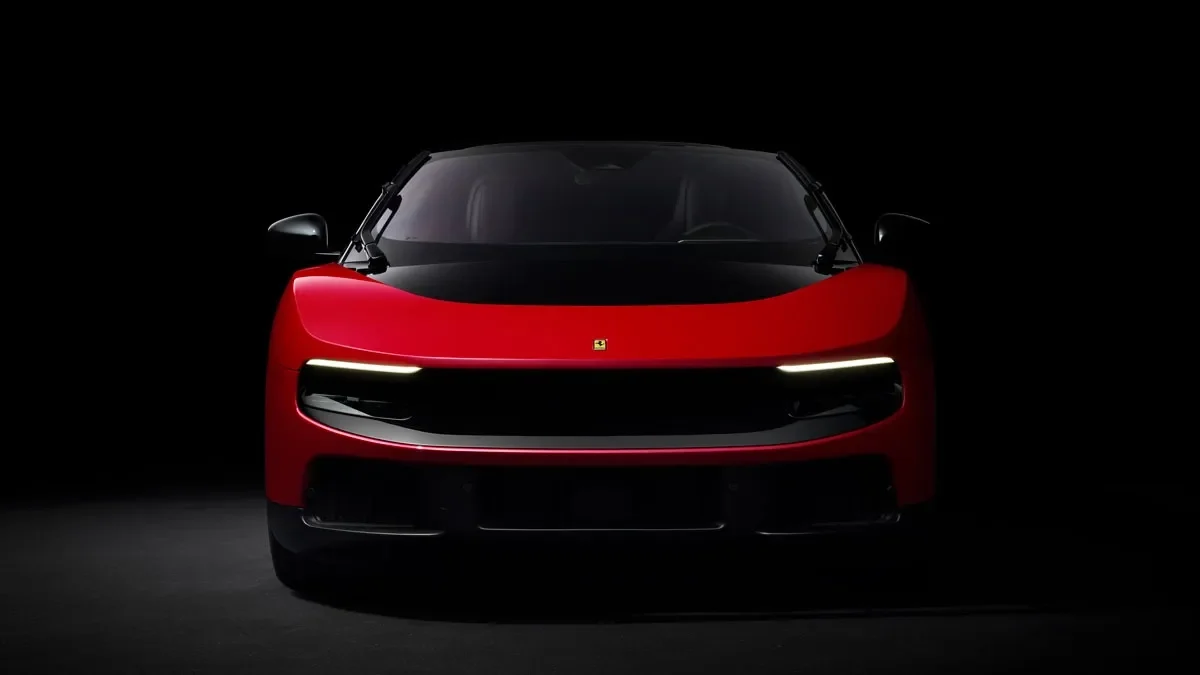
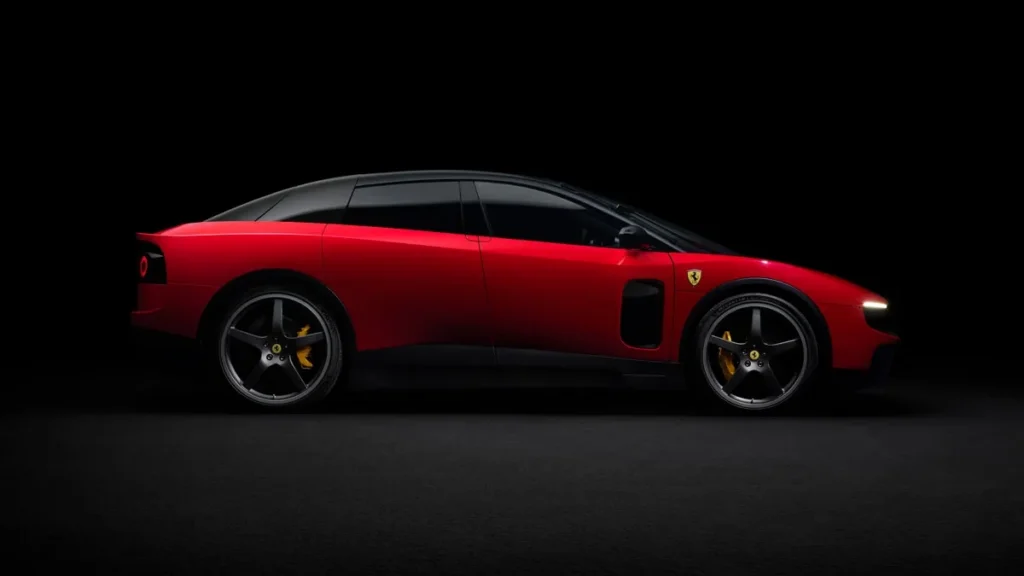
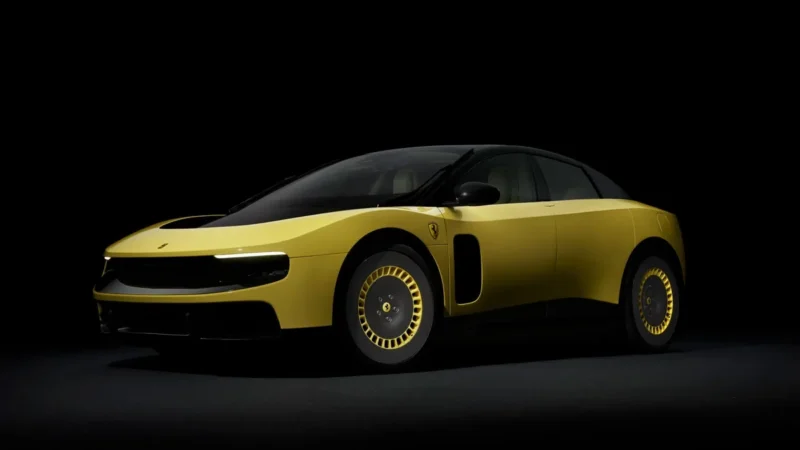
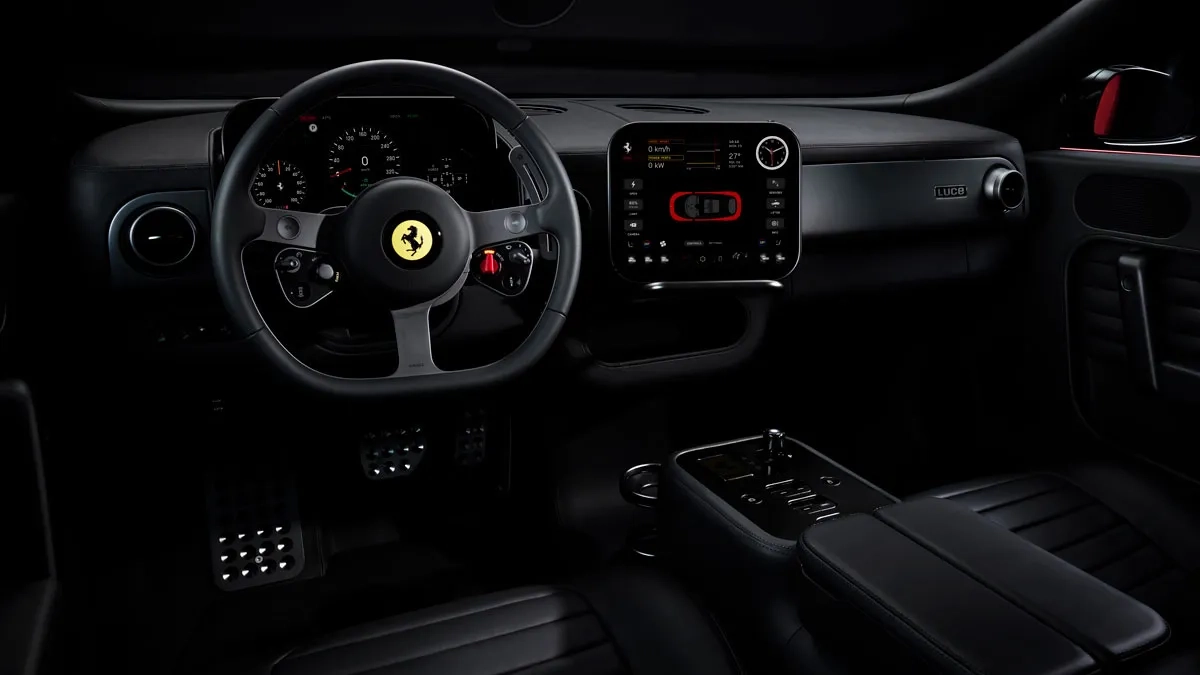
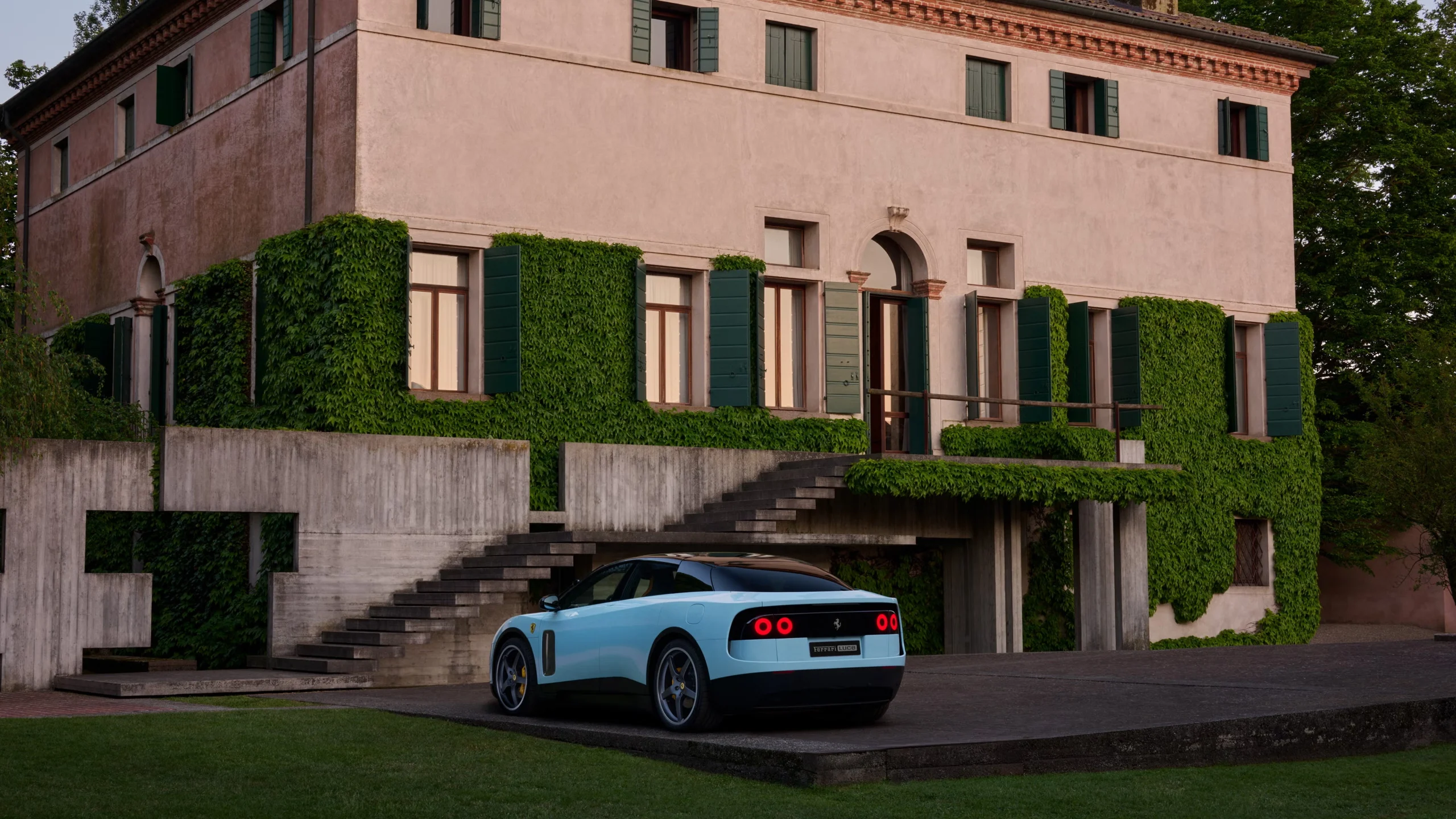
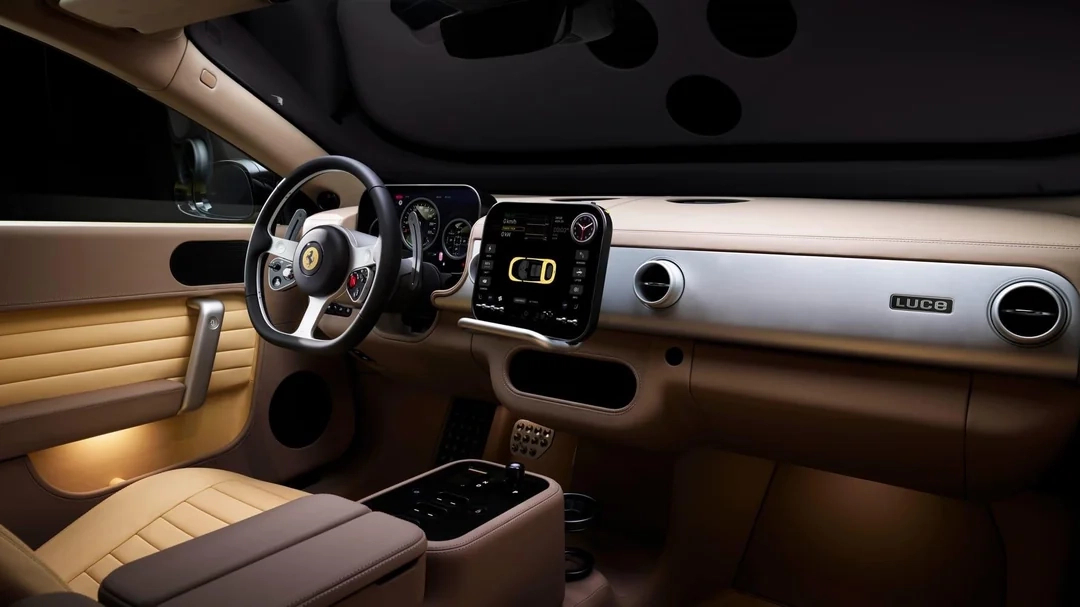
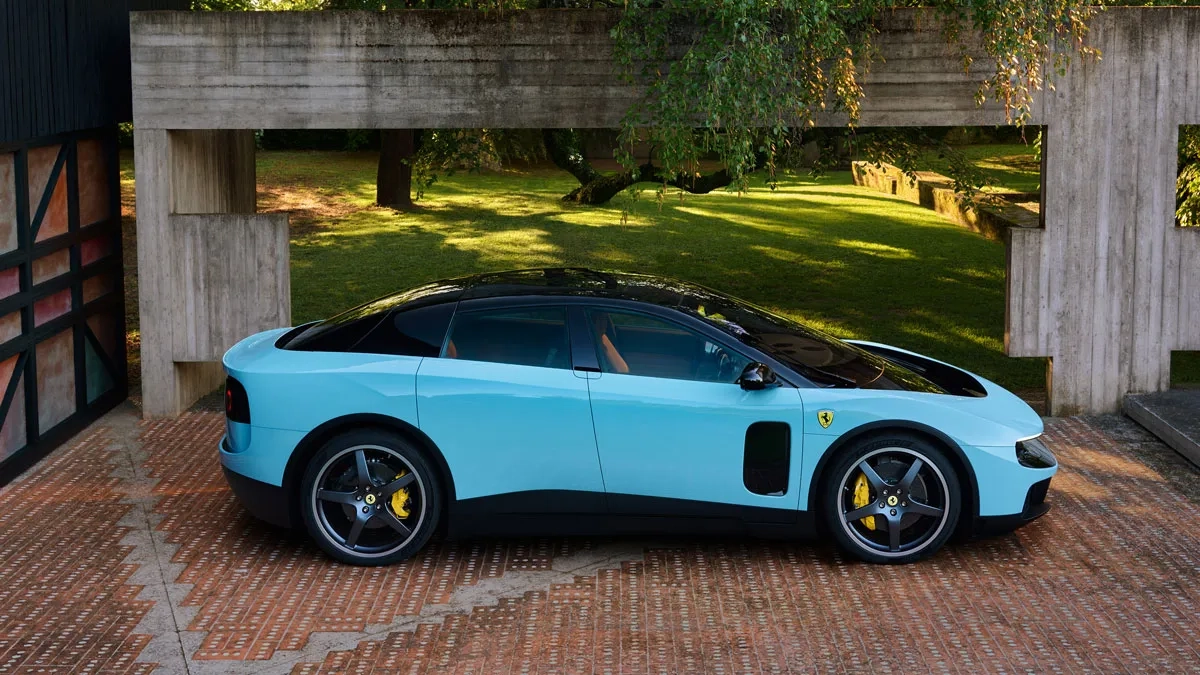
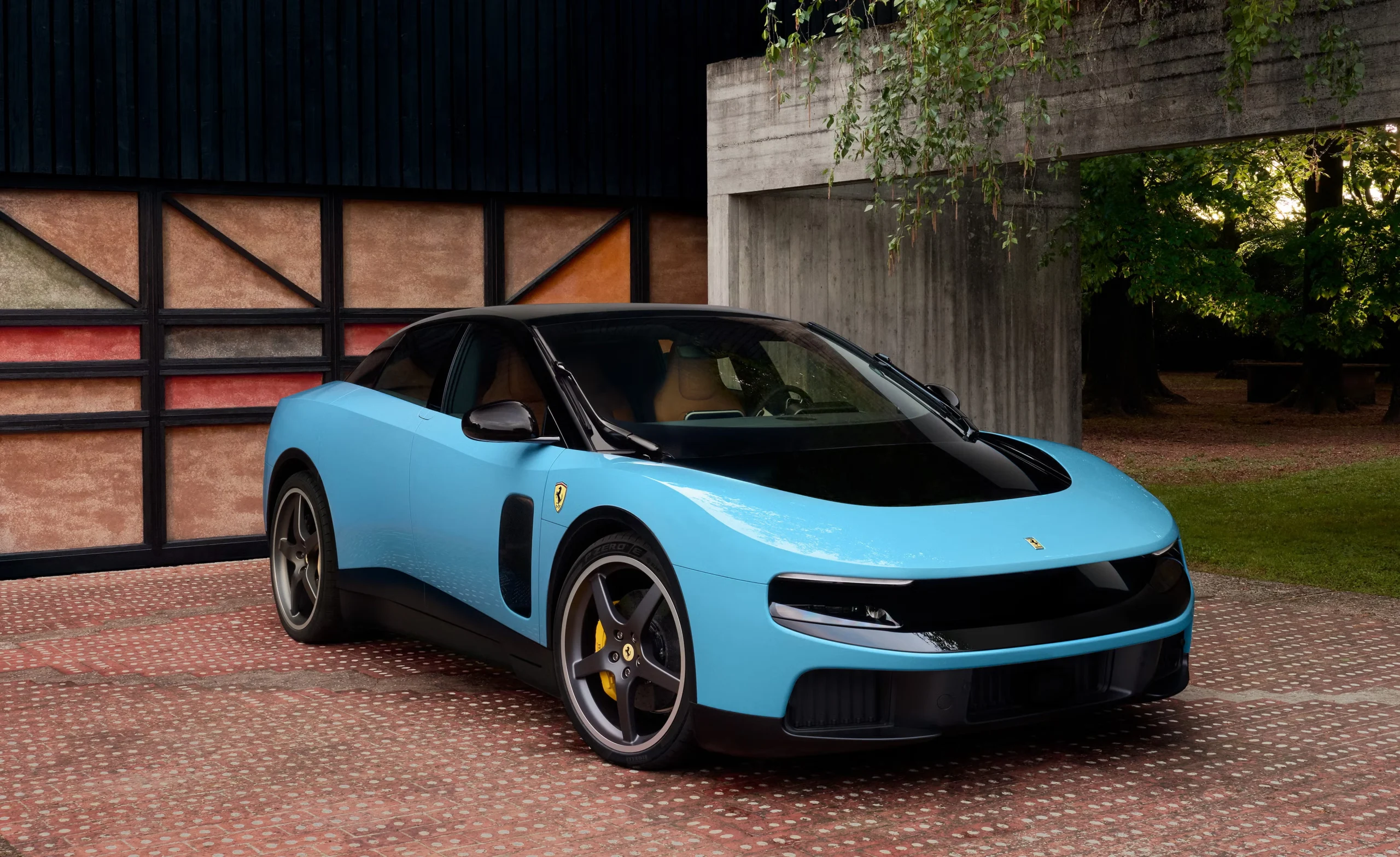
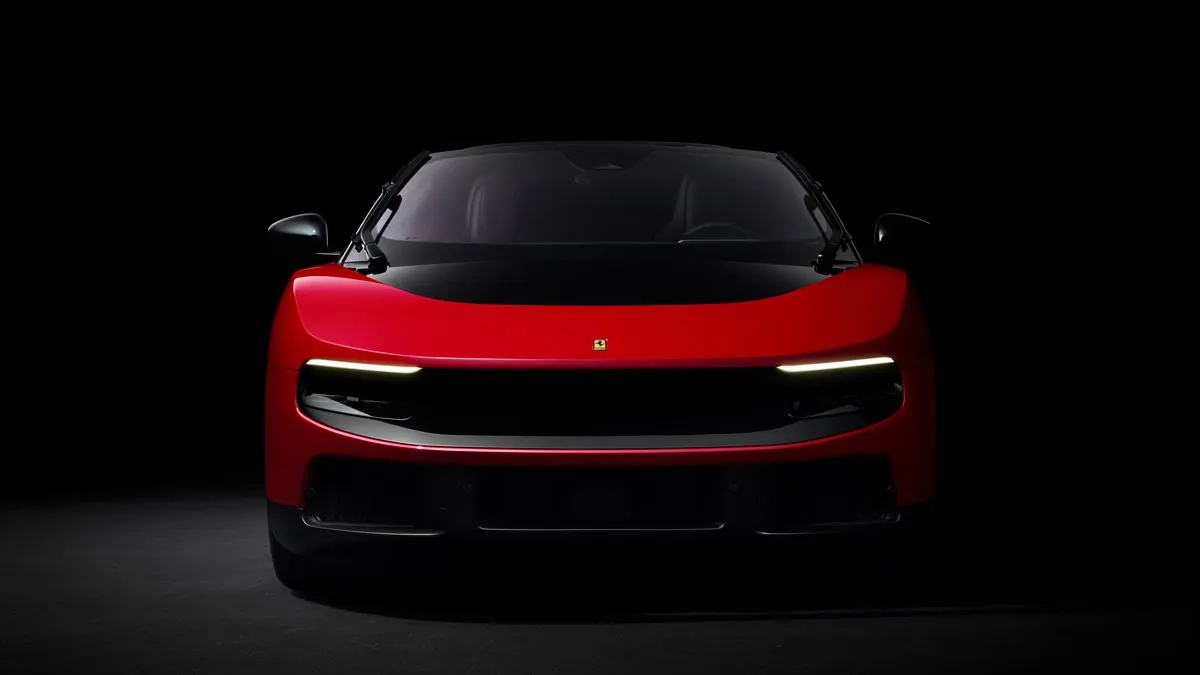
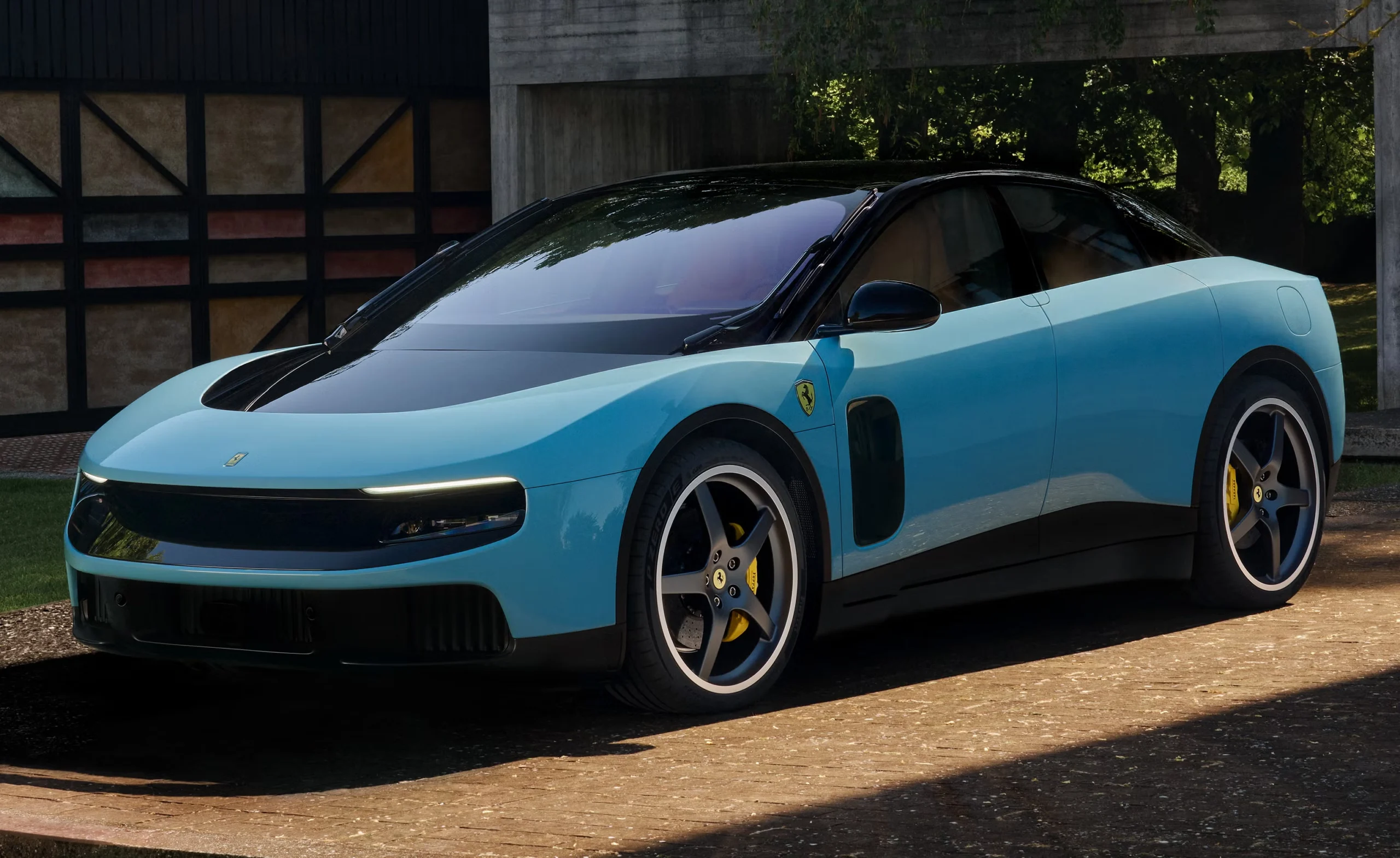
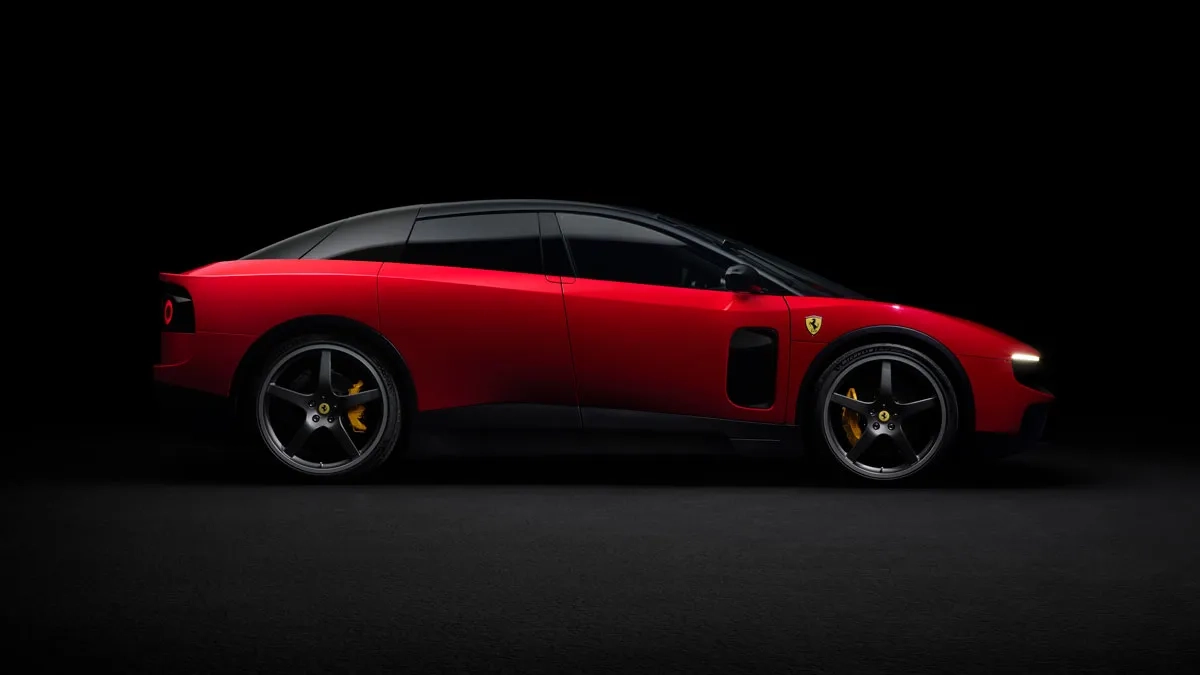
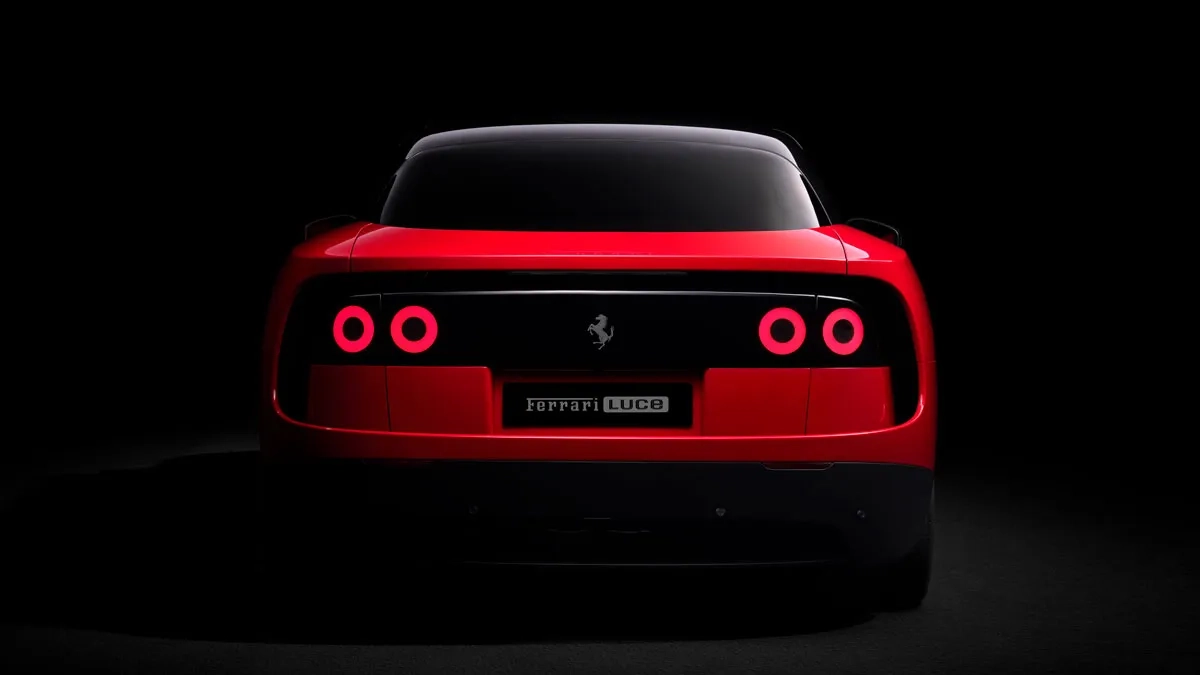
That’s exactly why the arrival of the Ferrari Luce feels like a major moment rather than just another product launch. This is Ferrari’s first fully electric production car. Whether you love the idea or hate it, the Luce represents one of the biggest shifts in the company’s history. It isn’t just another luxury EV entering an increasingly crowded market; it’s Ferrari’s attempt to bring its identity into a future where internal combustion is no longer the default.
The Numbers and the Real Challenge
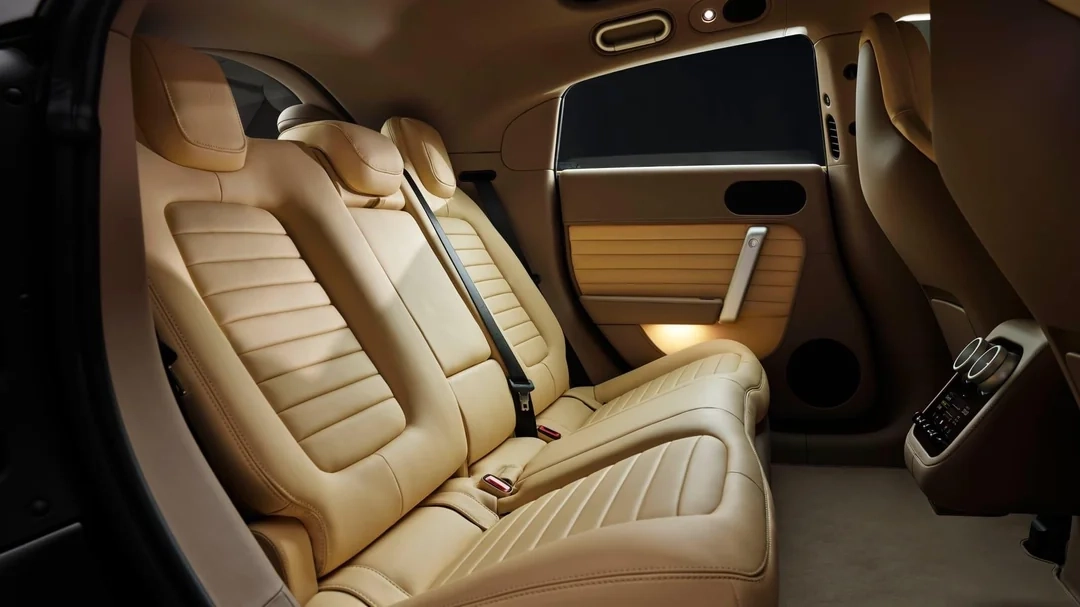
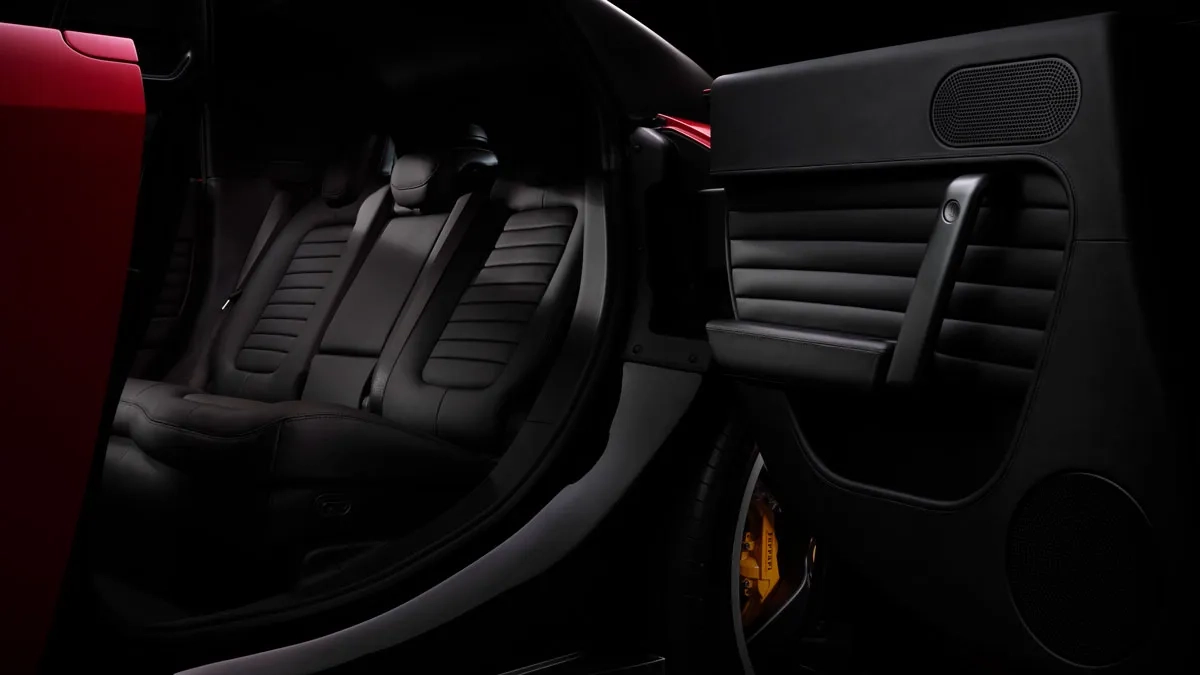
Named after the Italian word for “light,” the Luce is a four-door, five-seat grand tourer developed in collaboration with Jony Ive and Marc Newson’s creative firm, LoveFrom. Scheduled for deliveries in late 2026, it carries a striking $640,000 price tag. On paper, the numbers are substantial: four electric motors producing more than 1,000 horsepower, a 0–60 mph time of 2.5 seconds, a top speed above 193 mph, and a claimed range of 310 miles.
But in 2026, shocking acceleration alone doesn’t separate a car from the crowd anymore. Even family sedans are putting up numbers that would have embarrassed supercars a decade ago.
Ferrari fans may tolerate hybrids, but a silent Ferrari is a tougher sell. Performance matters, but for decades the soundtrack has been part of the experience.
Ferrari knows this. Rather than pumping fake engine sounds through speakers, engineers reportedly developed an acoustic system that captures and amplifies natural vibrations from the electric powertrain. The goal is to create some level of physical feedback and connection, but whether that can replace the character of a combustion engine remains to be seen.
A Legacy Built on Engines
For generations, Ferrari’s identity started in the engine bay. Enzo Ferrari founded Scuderia Ferrari in 1929 as a racing team and only began building road cars in 1947 to fund those racing efforts. Because of those roots, Ferrari never felt like a traditional luxury brand focused on comfort. The company built its reputation on competition, speed, and drama.
Over the years, cars like the 250 GTO, Testarossa, F40, and LaFerrari established a simple expectation: a Ferrari should create an emotional reaction before it even leaves the driveway.
Ferrari S.p.A.
The Luce changes that formula. It has four doors, five seats, and a design language that leans toward cleaner, simpler shapes rather than the aggressive styling Ferrari buyers are used to seeing.
The styling drew enough attention that The Guardian reported a dip in Ferrari’s stock price after the reveal as analysts and enthusiasts questioned whether it looked enough like a Ferrari sports car.
Balancing Rarity and Reality
Today’s Ferrari is very different from the boutique racing operation Enzo once ran. It’s now a publicly traded luxury powerhouse. The company has already experimented with electrification through models like the SF90 Stradale and the 296, so battery technology isn’t entirely new territory.
Still, Ferrari appears to be moving carefully. The company recently pulled back on aggressive electrification targets. Its current 2030 strategy calls for a lineup made up of 40% internal combustion vehicles, 40% hybrids, and only 20% fully electric models.
That suggests Ferrari understands the challenge in front of it. The company isn’t walking away from its engines overnight. The Luce feels more like Ferrari testing how much change buyers are willing to accept without losing what made the brand special in the first place.
Ferrari also has less room for error than most manufacturers. If a mainstream EV misses the mark, it becomes a disappointing launch. If Ferrari misses, enthusiasts will see it as something much bigger.
The Luce also appears aimed at a slightly different buyer: collectors who want a technologically advanced daily driver without leaving the Ferrari ecosystem. Reports suggest Ferrari is paying close attention to markets like China, where luxury EV adoption has grown quickly.
Will Purists Buy It?
Any time Ferrari moves outside its comfort zone, criticism usually follows. It happened with front-engine grand tourers, mid-engine supercars, and more recently the Purosangue SUV.
History usually forgives the move if the car ends up being great to drive.
The Luce has plenty working in its favor. A four-motor setup creates opportunities for incredibly precise torque vectoring, and the interior avoids becoming another oversized screen with seats attached. The partnership with Jony Ive also gives the project some cultural weight.
Still, Ferrari buyers have always purchased more than speed. Plenty of vehicles today can produce incredible numbers. Very few create anticipation before you even push the start button.
Enzo Ferrari once said, “Aerodynamics are for people who can’t build engines.” Modern Ferraris rely heavily on software, airflow, and technology, but the quote still reflects an era where mechanical emotion mattered more than numbers.
Ultimately, the Luce isn’t asking anyone to forget the sound of a V12. It’s asking whether a Ferrari can still feel like a Ferrari when the engine is no longer the centerpiece.
That answer won’t come from stock prices or spec sheets. It will come when owners get behind the wheel, press the accelerator, and decide whether it still creates the emotional connection people expect from the badge.
Maybe you’re thinking of dropping a supercharger in your C7 Stingray. Or adding power brakes and a 5-speed to your C3.
Or perhaps you’re thinking of building a Factory Five Mk4 roadster in your garage as a retirement project.
In all three cases, you might be wondering: how am I going to insure this thing?
We’re here to tell you that insuring a modified or custom car isn’t just possible – it may be easier (and cheaper) than you think.
But there are definitely ways to do it wrong. So let’s cover custom car insurance: how it works, expensive mistakes to avoid, and how to get the best bang for your buck.
What qualifies as a modified or custom vehicle?
First things first, what’s the difference between a modified and custom vehicle?
Modified vehicles are factory-made vehicles fitted with non-factory parts. A C8 Stingray with a ProCharger supercharger – or a C3 with a lightweight acrylic T-Top – are both examples of modified vehicles. At NCM Insurance we consider a vehicle to be “modified” when the performance has been increased 25% or more, the body, chassis, or frame have been altered, a custom paint job over $10K in value, more than $5,000 in other modifications, or a stereo over $3,000.
Custom vehicles are built almost entirely from scratch. The 1961 Mako Shark Corvette, 1966 Batmobile and the infamous Oscar Meyer Weinermobile are all classic examples of custom vehicles. A “kit car” that you build in your garage – like the RCR Superlite-SLC – might also be considered a custom car.
Why standard auto insurance fails modified and custom vehicles
If you’re dedicated enough to own a custom or modified car, chances are that you’ll want it properly insured, too.
But this is where many traditional insurance providers fall flat.
Let’s say you purchase a C6 Corvette for $30,000 and install an A&A supercharger for $10,000. Then, you call a traditional insurance provider for a quote.
From there, a traditional provider may do one of four things:
Decline coverage. Traditional providers may refuse to cover custom or modified vehicles for a litany of reasons. They may be unable to properly assess their value, view them as high-risk, etc.
Insure it for the non-modified value only. Conversely, a traditional provider may write you a policy without protecting your expensive mods, leaving massive gaps in coverage.
Charge elevated premiums. On top of already-high premiums for sports cars, traditional providers may require you to purchase supplemental insurance to cover your modifications.
Deny claims and cancel your policy. Finally, if you’re already insured and you disclose your mods to your provider, they’ll sometimes cancel your policy outright. And if they discover undisclosed modifications during a covered repair, they may instantly deny your claim.
How to insure a modified or custom vehicle
Rather than strong-arming a traditional provider who doesn’t really want your business, the best way to purchase custom car insurance is through a specialty insurance provider that can offer superior coverage for better value.
Here’s what the process of purchasing custom car insurance looks like:
Find the right specialty insurance provider. When searching for the right provider to insure your custom or modified vehicle, it helps to be specific. If you have a Ford Street Rod, search “Ford Street Rod insurance.” This will help you connect with a provider – and a team of specialists – who truly understand your vehicle’s value and needs.
Determine the Agreed Value of your vehicle. With Agreed Value coverage, you and your provider will have an honest, amicable discussion and shake hands on the car’s value upfront – factoring in things like rarity, modifications and more. That way, you’ll know what your payout amount will be in the event of a total loss.
Update and adjust your policy as needed. Car modifications are like tattoos; once you get one, it’s hard to stop. If you do plan to modify your vehicle further, it’s wise to let your specialty insurance provider know in advance so you can discuss a new Agreed Value and factor new premiums into your project budget.
How modifications impact coverage and claims
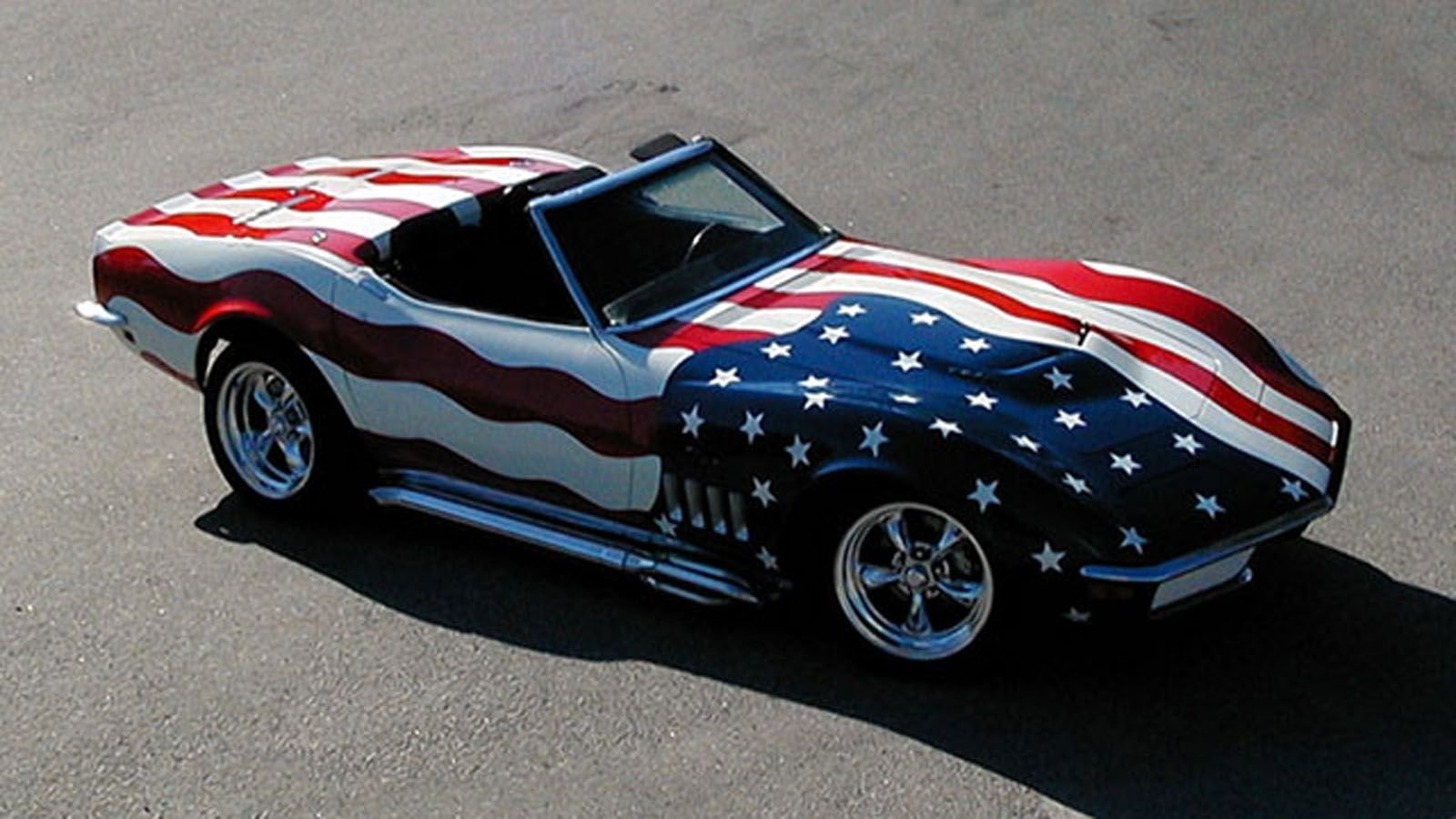
If you are considering dropping a $10,000 supercharger in your C6 Corvette – or getting a patriotic paint job on your C3 – how would such a big modification affect your insurance situation?
With traditional insurance, modifying your vehicle to the tune of $2,000 or more (pun intended) can lead to coverage gaps, claim denials and policy cancellations.
With specialty insurance, however, modifying your car is typically much less punishing than that. As a direct result of declaring mods, you may see three concrete changes to your custom car insurance policy.
Increased premiums. An increase to your Agreed Value will generally lead to a small increase in premiums.
Increased claim payouts. If your modifications lead to a higher Agreed Value, you’ll receive a larger payout in the event of a total loss.
Longer lead times for covered repairs. Naturally, it’ll take longer to repair a modified vehicle than a bone stock one. But a good specialty provider can connect you with the right parts and labor to return your vehicle to pre-loss condition.
Insuring custom builds vs. factory vehicles
As for insuring a custom-built car, any vehicle built from the ground up will be much more difficult to repair or replace than a bone-stock factory equivalent.
As a result, the owner of the Mako Shark may see two key differences in his insurance situation than the owner of a regular C3:
Higher likelihood of a total loss. Since it may be impossible to repair or replace a one-off custom car, the likelihood of it being “totaled” following an accident goes up.
Higher premiums. Since your custom car has a higher chance of being totaled, your premiums will likely be much higher to compensate.
Even still, “higher” doesn’t have to mean “high.” At NCM Insurance, we understand that owners of highly modified cars tend to drive less (and less aggressively) in order to preserve the value of their special vehicle.
Protect the time, money, and craftsmanship in your custom car. Request a custom
Why Specialty Insurance Matters for Sports, Exotic, and Collector Cars
By: Chris Butsch
Would you take a 1963 Split-Window Corvette to one of those 5-minute oil change places?
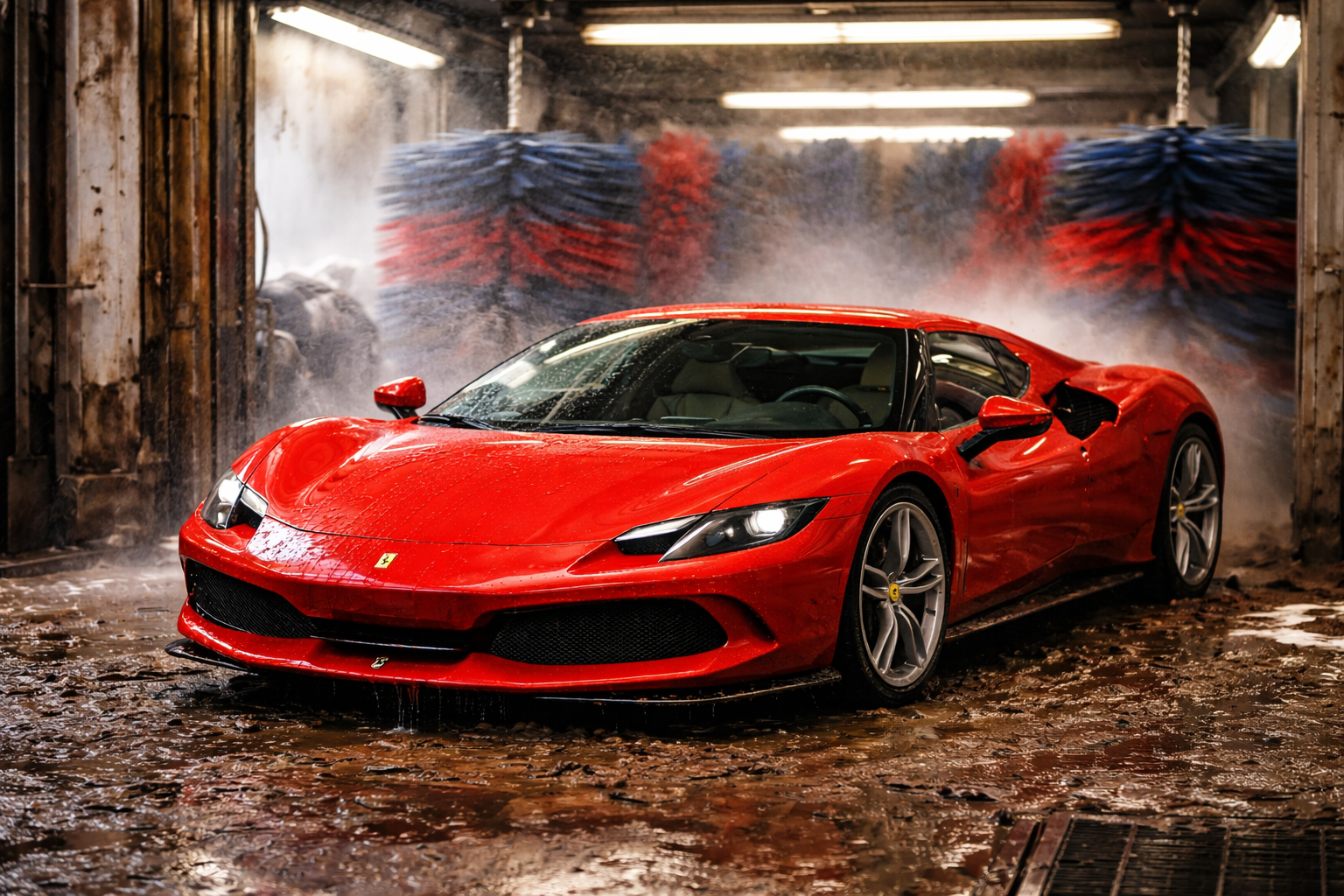
Or drive a Ferrari 296 GTB through an automatic gas station car wash, with brushes that haven’t been cleaned since 2015?
Of course not. You know that these rare, high-value cars need special care and attention to retain their value and operate at their peak potential.
That’s why sports, exotic and classic car owners choose their technicians and detailers carefully. The same goes for their insurance provider, since the traditional insurance model just isn’t designed to protect these high-value cars.
But how exactly does traditional insurance fall flat for owners of rare, high-value vehicles? What are the hidden gaps? And how can a specialty insurance policy provide superior coverage (for sometimes less than you might think)?
Where traditional insurance falls flat for rare, high-value cars
The traditional auto insurance model was designed with a Camry in mind – not a Carrera GT. As such, anyone looking to insure a high-end sports, exotic or collector car with a brand-name provider may encounter the following hassles:
You may be denied coverage upfront – Some carriers will not insure a vehicle if it’s too old, too valuable, or has been customized or modified.
Premiums can be exorbitantly expensive – To hedge their risk, traditional providers can charge eye-watering premiums for sports, exotic or classic cars.
Lack of specialty add-ons – Do you need track day insurance for your Huracan Evo? Spare parts coverage for your C3 Corvette T-Top? Traditional carriers are less likely to have these specialty add-ons available when you need them.
Repairs can be a hassle – A traditional provider may restrict you to underqualified in-network shops for repairs, force them to use cheap remanufactured or aftermarket parts, and take other shortcuts to save themselves money at your expense.
Higher likelihood of a total loss – An insurance provider that doesn’t understand your exotic or classic car may be quicker to total it after an incident, giving it a salvage title and making it legally undrivable when it could’ve been repaired.
Lowball settlements – In the event of a total loss, traditional insurance providers will typically give you the Actual Cash Value (ACV) of your vehicle. That’s fine for a mass-market vehicle like a Camry, but on a sports/exotic/collector vehicle, the ACV can come in tens of thousands less than the Agreed Value (explained below).
Denied claims or canceled coverage – Finally, if you choose to modify or customize your sports, exotic or collector car in some way (e.g. bigger engine, airbag delete), a traditional provider may use that as the basis to cancel your coverage outright or deny your claims when you most need it.
Needless to say, insuring a sports, exotic or collector vehicle through a traditional, big-name insurance carrier can be – ironically – rather risky.
That’s why many exotic car owners turn to specialty insurance providers that can provide tailored protection for better value.
Why specialty car insurance matters for sports, exotic and collector cars
Like 100 Octane fuel and Royal Purple Synthetic, specialty insurance was designed specifically with high-end machines in mind. Here are some of the key features that make a specialty policy stand out from a traditional one:
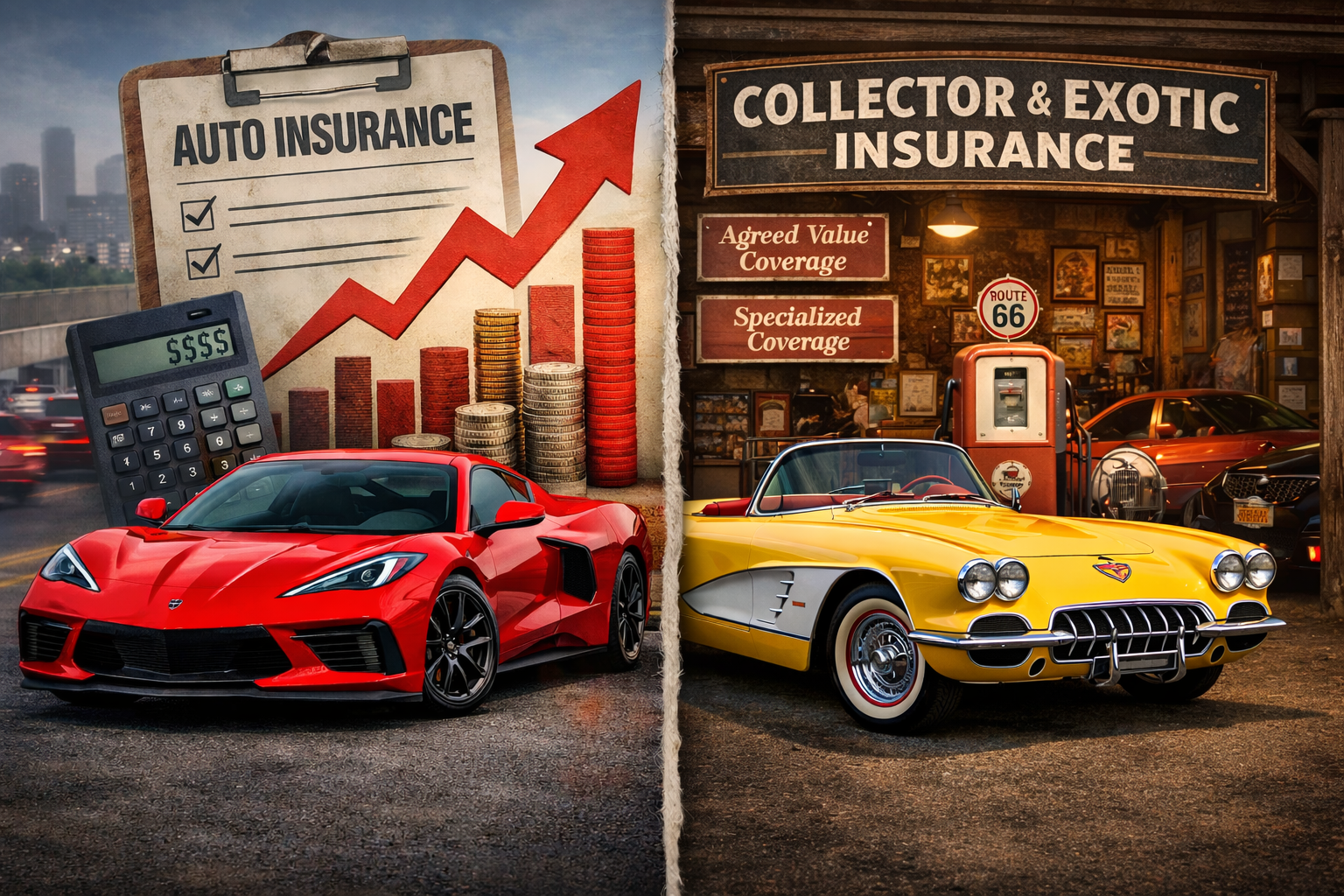
Agreed Value Protection (AVP) – With AVP, you and your specialty provider will discuss and agree upon the value of your car when you take out your policy. Then, in the event of a total loss, you’ll receive the Agreed Value – not the Actual Cash Value, which is often thousands less.
Tailored claims process – Specialty car insurance providers are often staffed by enthusiasts just like you who have a better understanding of your vehicle – and your relationship to it.
Quality repairs – Auto insurance for exotic cars will pay for high-quality parts and labor to restore your special car to pre-loss condition. Policies are often flexible about letting you choose your own shop, too, if you have a tuner or restoration tech you already know and trust.
Flexible deductibles – At NCM we offer flexible deductibles ranging anywhere from $0 to $10,000. This allows for greater fine-tuning of your policy to fit your needs and budget.
Specialty discounts and add-ons – With specialty insurance, you can get coverage for spare parts, mods, track day insurance (single-day, multi-day or annual), blanket policies for large collections, etc. You can also get discounts for taking defensive driving courses and performance driving courses.
It can still end up cheaper than traditional insurance – Despite all this, a specialty insurance policy can be better and cheaper than a traditional insurance policy. In fact, you might be surprised at how wide the gulf in price can be. To learn more and see real-world examples, check out our Traditional vs Specialty Coverage Guide (2026 Rates).
Who benefits the most from having specialty coverage?
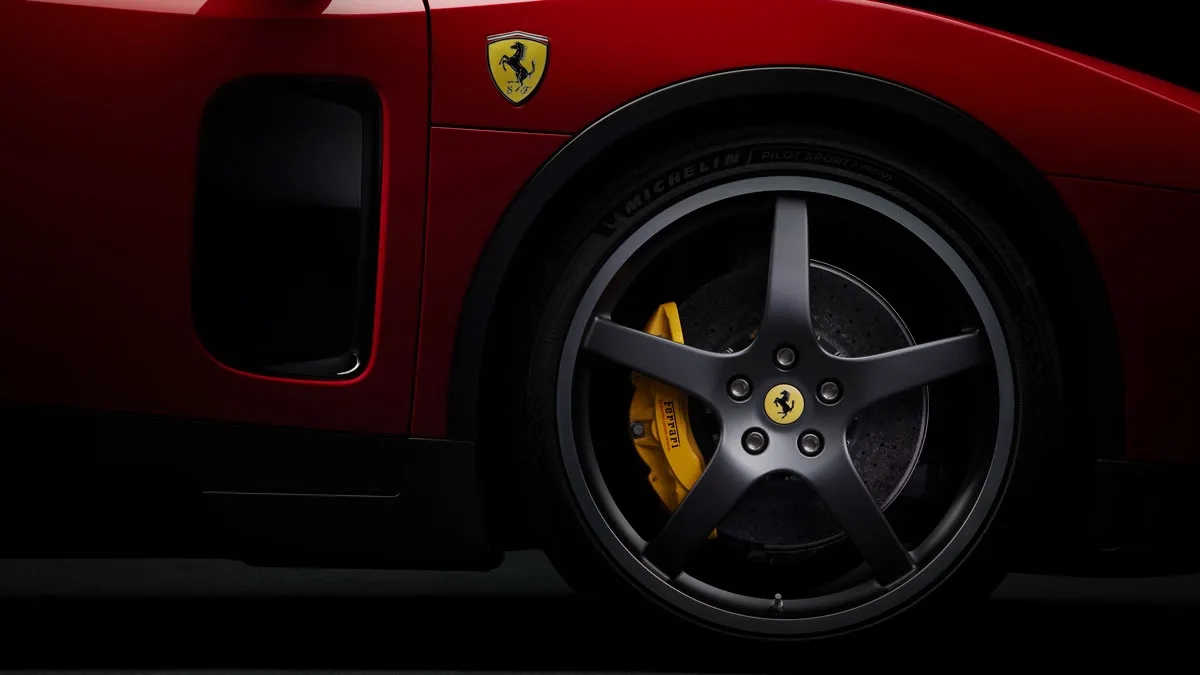
Specialty coverage is not without its limitations. It’s not designed to cover daily drivers, for example, so if you plan to drive your Ferrari Enzo 10,000+ miles per year like Richard Losee, you might have to make a few phone calls to find coverage.
But if you have a track-ready exotic, garage queen, weekend warrior, project car, custom ride, or something else special – and you think your existing provider is being a little unreasonable with your quote – it might be time for a change.
Switch to specialty coverage designed for serious car enthusiasts. Get a Quote today!
Corvettes are fast, valuable, two-door performance cars that beckon you to drop it into third and let your Kentucky V8 howl.
However, because they’re not a Toyota Corolla or a hybrid crossover, Corvettes are also enormously expensive to insure. After all, any car built to burn rubber is going to cost an arm and a leg for halfway-decent coverage.
Or will it?
In truth, while a Corvette owner may pay significantly higher premiums with a traditional auto insurance provider, you may find that a specialty insurance provider – who better understands both car and driver – can offer better protection at potentially lower rates.
So let’s explore how much Corvette insurance costs with a traditional vs. specialty provider, how high-value ‘Vettes like the Z06 factor in, and how something called “AVP” helps Corvette owners nationwide sleep better at night.
Average Corvette insurance costs by model and generation
How much does Corvette insurance cost for each generation of the American automotive icon? Are some generations significantly cheaper – or more expensive – than others?
To find out, we anonymously collected quotes from a major insurance provider using a typical Corvette driver profile:
“Ralph Lauren” is a 57-year-old Kentucky resident with a clean driving record and a garage. Since he owns multiple cars, he drives his ‘Vette less than 4,000 miles per year. He also wants robust coverage for peace of mind: that means $250,000/$500,000/$250,000 in liability limits, plus collision and comprehensive, with a $250 deductible.
As for the vehicles, we collected quotes using roughly the median agreed value for each Corvette generation. In other words, a pretty standard C1, C2, etc. Nothing too fancy (no 1967 L89s).
Preamble aside, here’s what Ralph would pay a traditional insurance provider versus a specialty insurance provider for similar coverage:
Corvette Generation
Traditional Insurance Quote
Specialty Insurance Quote (NCM)
C1
Unavailable
$500 – $600/year
C2
Unavailable
$500 – $600/year
C3
$800 – $900/year
$200 – $300/year
C4
$1,100 – $1,200/year
$300 – $400/year
C5
$1,400 – $1,500/year
$300 – $500/year
C6
$1,700 – $1,900/year
$500 – $600/year
C7 Stingray
$2,100 – $2,300/year
$500 – $600/year
C8 Stingray
$2,400 – $2,600/year
$700 – $800/year
Aside from (potentially) lower rates, why else should a Corvette owner like you consider specialty insurance?
Why Corvettes require specialty coverage
For many Corvette owners, a specialty insurance policy for your prized ride can provide significantly better protection – for potentially less money – than a traditional auto insurance policy.
Here are a few reasons why:
Agreed value protection (AVP): With AVP, you and your provider will come to an agreement on the fair value of your Corvette before coverage even begins. That way, in the event of a total loss, you’ll receive a check for the agreed value – not the heavily depreciated value, as you typically would with a traditional auto policy.
Quality parts and labor: Specialty insurance providers understand that classic and high-performance cars require quality parts and skilled labor to restore to pre-loss condition. No slapping Bondo on it and calling it a day.
Modification-friendly: Let’s say you send your ‘Vette off to Callaway for a Gen4 Supercharger. In the event of a total loss, traditional insurance may not cover your $15,000 upgrade. But specialty providers may offer supplemental coverage to protect your modifications – however big or small.
Unique discounts: Finally, specialty providers may offer unique discounts to lower your premiums even further. At NCM Insurance, for example, we offer discounts for having an alarm in your garage, having paid membership to select automotive enthusiast groups and special multi-vehicle discounts for collectors.
Stingray vs Z06 vs classic Corvette insurance considerations
In the chart above, you may have noticed that the cost of specialty insurance tends to dip around the C4 generation and peak with the C8.
In fact, the most expensive Corvettes to insure tend to be your mint-condition C1s and tire-burning variants like the Z06, ZR1 and ZR1X.
Why is that?
Ultimately, it comes down to the cost of repairs. Classic, rare and ultra-high-performance Corvettes have parts that are harder to find and harder to fix than your basic, mass-produced Stingray.
In addition, the frequency of total losses (where the cost of repairs exceeds the value of the car) is higher on these more “exotic” variants.
As a net result, if you own a rare Corvette – whether it’s a 1978 Silver Anniversary or a 2026 ZR1 – you might consider a specialty Corvette insurance policy since the benefits over a traditional policy are amplified even further.
How agreed value coverage protects long-term value
Finally, let’s briefly circle back on agreed value protection (AVP) since many owners call it the #1 benefit to having specialty Corvette insurance.
To recap, AVP involves you and your provider “agreeing” on the fair value of the vehicle when you first purchase your policy. Your Corvette’s condition, rarity, modifications and more can all factor into the agreed value conversation.
Once established, the agreed value will not change unless you specifically request an adjustment. For example, maybe you get $10,000 worth of restoration work done, and you’d like your Corvette’s agreed value to increase. Or maybe you’ve put some serious miles on your ‘Vette and you’d like your agreed value to decrease to reflect its current condition (and lower your premiums).
In either case, your next step would be to have a conversation with your special insurance provider to come up with a new agreed value. They won’t change it until you specifically ask them to.
Then, in the event of a total loss, your specialty provider will pay you the agreed value of your vehicle. This can often be thousands or tens of thousands more than the “fair market value,” or FMV, that traditional insurance providers use to calculate settlements.
The bottom line: specialty Corvette insurance can be better, cheaper and more benefit-rich than traditional coverage. Insure your Corvette with a provider built around Corvette ownership. Get a Corvette-specific quote today.
2020 Mclaren Senna GTR at RM Sotheby’s Scottsdale 2025
Sports car insurance is like the 93 octane of auto insurance. It maximizes your car’s potential, improves its longevity and brings you – the owner – peace of mind.
Because traditional car insurance (“87 octane,” if you will) isn’t tailor-suited for sports cars, it leaves too many gaps in coverage, and by the time you fill them with higher limits and additional coverage types, it can become prohibitively expensive.
So let’s cover why traditional insurance is so expensive for sports cars, the crucial gaps it leaves, and how specialty car insurance for sports cars can actually save you time, stress and potentially money.
What Qualifies as a “Sports Car” for Insurance Purposes?
While there’s no industry-standard definition of a “sports car,” insurance carriers typically charge higher premiums for vehicles that are:
Coupes or two-seaters
Built for speed
Lighter than a sedan
Everything from a humble ND Miata to a Corvette C8 Z06 will fall into this category, and as a result, owners will often see higher rates for coverage compared to sedans, trucks or crossovers.
Why Sports Cars Cost More to Insure
Even though a C7 Corvette now costs less than a new Camry, most traditional carriers will charge more to insure the ‘Vette for a litany of reasons:
High cost of repairs – High-performance cars are made of high-performance parts (e.g. carbon fiber parts, dynamic engine mounts, superchargers) that are more expensive to repair and replace.
High cost of replacement – Sports cars generally cost more to purchase, and therefore, cost more for the insurance provider to replace.
Elevated theft risk – Expensive high-performance vehicles are attractive targets for thieves. The Camaro ZL1 is the most stolen vehicle in America, according to the IIHS, with a vehicle theft rate 39 times higher than the average for all vehicles.
Higher likelihood of a crash – Unsurprisingly, vehicles designed for speed tend to crash more often. An iSeeCars study found that Corvette owners were involved in crashes 4.8x more often than the average driver. Porsche 911 owners were just behind at 4.6x.
Risky driver profiles – Finally, sports cars tend to attract young single men – the most expensive drivers to insure due to high rates of accidents – which can raise premiums for all drivers of that particular sports car.
Coverage Options that Matter the Most
When shopping for the best insurance for your sports car, you’ll want to consider both traditional and non-traditional coverage for true peace of mind:
Liability – High horsepower can lead to more expensive crashes – especially if you plan to drive in proximity to other high-end sports cars (e.g. car meets, car shows, etc.). Therefore, you’ll want higher liability limits than your state’s required minimums.
Collision – In a similar vein, you’ll want enough collision coverage to repair or replace your beloved sports car in the event of a total loss.
Uninsured/Underinsured Motorist Protection – Statistically, most motorists don’t carry enough liability coverage to replace a $50,000+ sports car. 15.4% carry no insurance at all. That’s why sports car owners should strongly consider UM/UIM protection.
Comprehensive – Finally, raising your comprehensive coverage limits can better protect the value of your sports car from weather damage, animal-related incidents, fire, and especially theft.
While traditional insurance carriers will happily increase your liability/collision/comp limits, they may not be able to offer non-traditional support and coverage types that every sports car owner should consider. Things like:
Agreed value insurance – Under an agreed value insurance policy, you and your insurance provider “agree” on a fair value of your vehicle before an accident occurs. This allows you to factor in things like rarity, condition, modifications etc.
HPDE insurance – High-Performance Driver Education insurance, aka “track day insurance,” is a separate policy that covers damage to your vehicle incurred during an organized autocross or track day event – a crucial gap left by most traditional insurance.
Specialty underwriting – Carriers that offer dedicated sports, exotic and classic car insurance typically employ underwriters that specialize in these types of vehicles – leading to a more tailored experience for owners.
When specialty insurers outperform traditional carriers
Specialty sports car insurance isn’t just more robust than traditional insurance; it can also be cheaper. At NCM Insurance, we understand that collector cars aren’t daily beaters. And not every sports car owner is auditioning for the Dukes of Hazzard – and deserves punishing rates for basic coverage.
Instead, you’ll get a sports car insurance quote that’s tailored to you and your vehicle, backed by best-in-class customer service and a dedicated claims adjuster who speaks your language. A short call with NCM Insurance can result in better coverage, increased peace of mind, and possibly even lower rates than you’re paying today.
Get a personalized sports car insurance quote from a specialty insurer who understands – and shares – your passion for performance vehicles. Click here for a quote!.
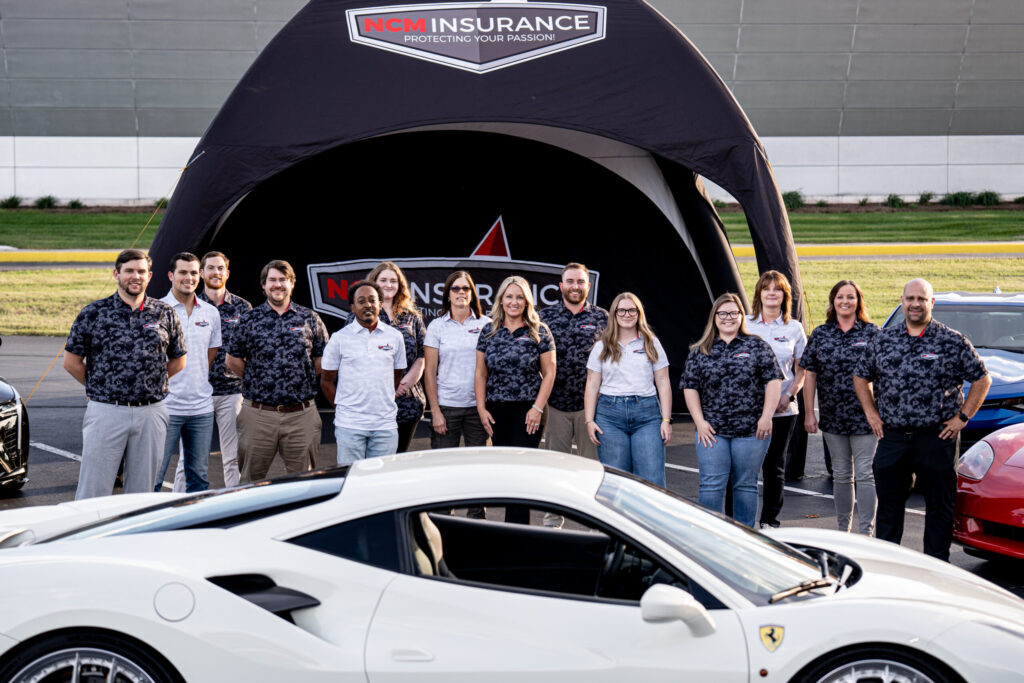
At NCM Insurance, our mission is clear: deliver #1 customer service and provide the best Exotic Car Insurance, best Collector Car Insurance, best Corvette Insurance, and best Sports Car Insurance in the country. Learn how NCM Insurance’s growing team is enhancing the #1 customer service experience for collector cars, exotics, sports cars, and Corvettes. As demand grows, so does our responsibility to stay ahead of our customers’ expectations—and we take that responsibility seriously.
What began last year with two new hires has now become a strategic expansion that positions us for the future. Business growth has accelerated, and to maintain the gold standard our customers expect, we expanded again—bringing on four additional team members and building out fully aligned departments dedicated to operational excellence and a flawless customer experience.
Every change we’ve made has one purpose: to give our customers the fastest, most accurate, and most enjoyable service in the industry. The energy inside our office is higher than ever, and our customers are already feeling the difference.
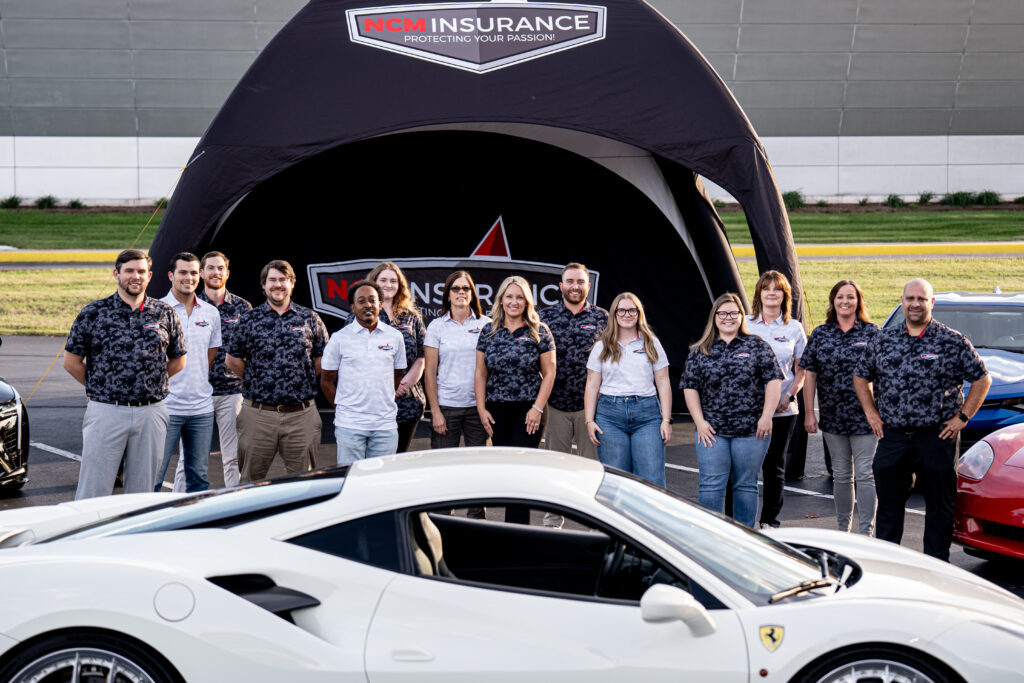
NCM Insurance Team
Today, we proudly introduce the newest members of the NCM Insurance team—the people helping us set the benchmark for what top-tier service in the specialty auto insurance world looks like.
Hallie B. Customer Service Representative / Digital Support Specialist
Hallie was our first addition in this new growth phase, and she hit the ground at full throttle. Already licensed and experienced in customer service, she brings a rare blend of technical skill, accuracy, and hospitality.
As part of our CSR/DSS team, she ensures customers receive the highest standard of support—reviewing documents, validating information, preparing policies for binding, and keeping every detail precise and on track.
Her dream car? A black-and-gold, nearly 1000hp 2019 Corvette ZR1 she built in Gran Turismo. Fair to say she fits in just fine here.
Emma W. Customer Service Representative
Emma joined us from the NCM Motorsports Park and is quickly becoming a force inside the CSR team. From document retention to DMV problem-solving, she approaches every task with professionalism and speed.
Armed with a Marketing degree, Emma is also stepping into a creative role to help us communicate our message of industry-leading service and top-tier specialty coverage to the world.
Her dream garage centerpiece? A Porsche 911 Turbo S. Excellent choice.
Isaac P. Insurance Agent
Isaac is our newest agent hire, and he’s already delivering results that exceed expectations. With an accounting background and an impressive ability to learn quickly, he earned his license and mastered industry knowledge at a remarkable pace.
He assists customers with quotes, binding coverage, and servicing policies—all while bringing an enthusiasm for interacting with owners of the most exciting cars on the road.
His dream car: a red 1974 Mustang. A classic never goes out of style.
Abby G. Retention Agent
Abby steps into a vital new role as NCM Insurance’s first Retention Agent—focused solely on ensuring existing customers continue receiving the best value and best coverage on the market.
Rate increases happen, but Abby is here to minimize the impact. Whether that means finding additional discounts or rewriting a policy through a different carrier, she ensures our customers stay protected at the right price. Her experience from another agency has already elevated our service.
She currently drives her dream Chevy Tahoe, but she’s eyeing a ’68–’69 Chevelle next.
Driving Forward With Purpose
Over 16 years ago, we envisioned an agency built on expertise, passion, and exceptional care for the people who love the cars we love. Today, that vision is becoming reality. By structuring our office into specialized departments and bringing in top-tier talent, we’re sharpening our commitment to being the #1 customer service experience in the specialty auto insurance space.
Our Executive Director, Adam Boca, shared it best: “We’re not just growing—we’re evolving to better serve the passionate Corvette and collector car community that’s trusted us for years. Our customers deserve the best Exotic, Collector, Sports Car, and Corvette insurance experience in the nation. These team members bring the talent and drive needed to make that happen. At NCM Insurance, it’s never just about policies. It’s about people who love cars taking care of people who love cars.”
With major initiatives coming in 2026—and even bigger plans beyond that—our evolution is just beginning.
If you thought NCM Insurance was strong before, just wait. The best is ahead.
At NCM Insurance, we specialize in protecting collector cars, classic Corvettes, exotics, and cherished vehicles that deserve more than ordinary coverage. Your garage is more than storage — it’s a sanctuary for your automotive passion and investment. That’s why it’s essential to understand Emergency Relocation Expense Coverage, a unique benefit within many collector car insurance policies that helps safeguard your vehicles if your garage becomes unusable due to fire, storm damage, or another covered peril. With this protection, you can be confident your collection is secure, even when the unexpected happens.
What Does This Coverage Do?
If a covered loss makes your garage unsafe or inaccessible, this coverage helps with the costs of relocating and safeguarding your collector cars. That may include:
Transporting vehicles to a secure storage facility
Covering expenses for climate-controlled storage
Handling relocation logistics to protect your collection until your garage is back online
Think of it as having a plan in place to keep your cars safe when your own space can’t.
When Would You Use It?
Picture this: a fire, storm damage, or another covered peril suddenly makes your garage unusable. Your first thought is the safety of your collection — where do the cars go, and how quickly can they be moved? Emergency Relocation Expense Coverage helps ensure you’re not scrambling in that moment.
How to Put It in Motion
If you ever need to activate this coverage:
File a claim right away — Just like reporting an accident, speed is key. Use your carrier’s claim portal to get started:
Document your expenses — Keep receipts for transport and storage.
Work with your adjuster — They’ll guide you on limits and approvals.
Lean on us — Our team understands collector cars and can help coordinate safe relocation.
Why It Matters for Car Enthusiasts
Collector cars deserve more than a quick fix — they deserve proper handling and protection. Emergency Relocation Expense Coverage gives you peace of mind knowing your vehicles can be quickly secured in the right environment, even if your garage can’t house them.
Let’s Review Your Coverage
All of our policies include Emergency Relocation Expense Coverage. If you would like to confirm your limits, give us a call. Our team speaks the same language you do — horsepower, originality, and preservation — and we’ll make sure your coverage reflects that.
One of the sayings about Collector Car Insurance policy is that it is “only as good as the claims service.” With back-to-back hurricanes striking the West Coast of Florida in late September and early October, some customers of the NCM Insurance Agency and their underwriter American Modern Insurance got to witness the claims process first-hand.
While the big box insurance companies were making their customers jump through hoops and requesting their customers have their damaged vehicles towed to a claims lot to be evaluated, the claims professionals from American Modern and the NCM Insurance Agency came to where their customer’s vehicles were parked, and they quickly worked through the volume of collector cars that were damaged by the catastrophic flooding and winds that came as Hurricane’s Helene and Milton impacted residents across the Southeast.
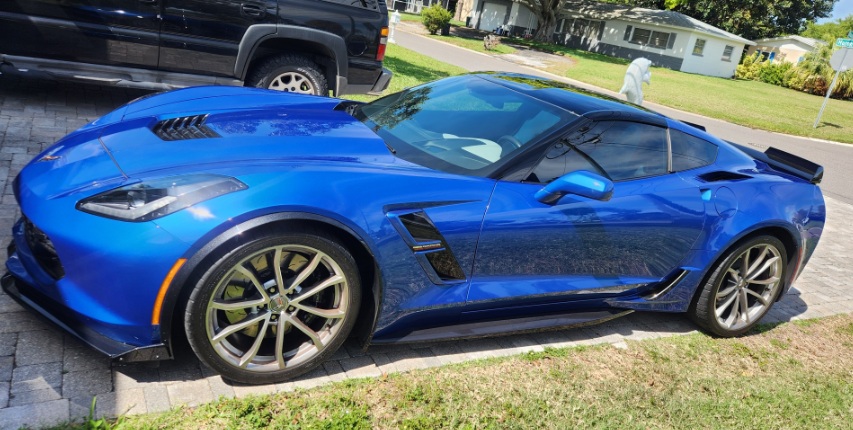
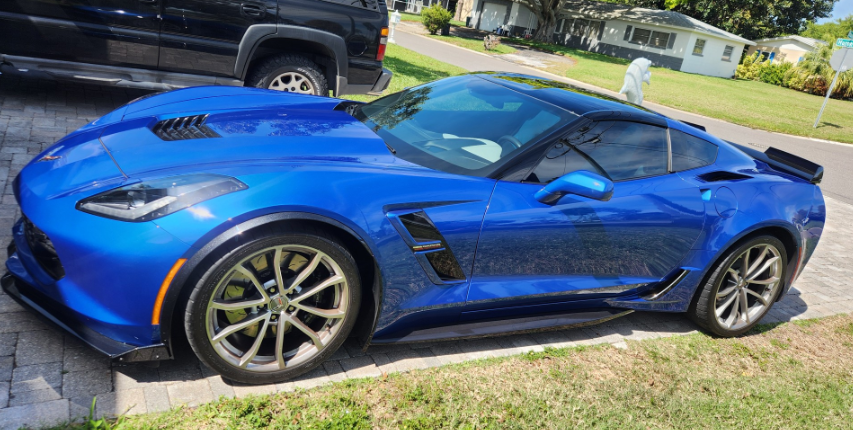
One of those customers of the NCM Insurance Agency was Steve Niemeyer whose 2019 Corvette Grand Sport was unfortunately one of the victims from Helene’s surprise storm surge. Steve not only had to deal with the loss of his beloved Corvette, but also the shock and trauma of losing most of his personal belongings when his house was flooded as well. Here is Steve in his own words describing the claims process following his loss:
Everyone at NCM Insurance and American Modern was very helpful and very informative. NCM Representatives kept me informed, walked me through the process, and let me know what to expect and were very understanding of my loss of my 2019 Corvette Grand Sport and the trauma that came with the loss of everything in my home that I was also dealing with. I highly recommend NCM Insurance and American Modern for the coverage and cost but mostly for the quality and knowledge of all the representatives who ultimately cared for and helped me get through this catastrophe.
Others in my area, insured by different companies, didn’t experience this same level of support. Most of those around me had to have their car taken in for an inspection and didn’t see a resolution as quickly as I did. My adjuster, Marc McQuitty, helped me understand what had happened to my vehicle in ways I never even imagined. He walked me through how the Corvette’s fiberglass structure and computer systems would continue to degrade over time because of the water damage. When I sent Marc a photo of the water line, he recognized right away that it was a total loss and took immediate action. Marc arranged to have the car picked up and got both my lienholder and me a check far faster than I expected.
Thank you! Steve Niemeyer
We are glad to hear that Steve’s claim was processed quickly and that he was dealing with a true claims professional that recognized right away that his C7 Grand Sport would be a complete loss due to the saltwater flooding that occurred from Hurricane Helene’s storm surge.
The NCM Insurance Agency only offers policies with an Agreed Value, so you know exactly what the replacement value is in case of a total loss. In Steve’s case, he also had to cover his lienholder on the car. Because of the fast claims service, the checks arrived sooner rather than later, allowing Steve to concentrate on dealing with his other losses and start the process of getting his house put back together.
When you bring a new vehicle to the NCM Insurance Agency, they lock in the purchase price for the first six months, so you don’t have to worry about depreciation or needing gap insurance. You can also save on liability with you have multiple vehicles on one policy. And with three mileage tiers available, you’ll have flexibility in choosing the one that works best for you and your driving habits. Best of all, any unused miles roll over year to year so take that road trip and know you’re protected by the NCM Insurance Agency.
Get your free quote today from the NCM Insurance Agency and see the difference they can offer. We say it’s better insurance at a better price, and you help support the National Corvette Museum in the process. Visit www.ncminsurance.com and Request your free quote today!