Elite Coverage Meets Unmatched Service

Hours

Mon - Fri
9:00 AM - 4:45 PM CST

Contact Us

350 Corvette Dr
Bowling Green, KY 42101

270-467-8848

Follow Us

E42A9100
Uncategorized

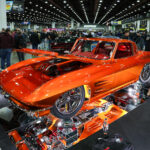
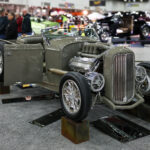
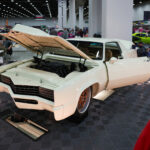
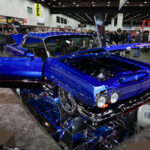
Custom Car Insurance: How to Properly Insure a Modified or Built-From-Scratch Vehicle

Intro

Maybe you’re thinking of dropping a supercharger in your C7 Stingray. Or adding power brakes and a 5-speed to your C3. 

Or perhaps you’re thinking of building a Factory Five Mk4 roadster in your garage as a retirement project. 

In all three cases, you might be wondering: how am I going to insure this thing? 

We’re here to tell you that insuring a modified or custom car isn’t just possible – it may be easier (and cheaper) than you think.

But there are definitely ways to do it wrong. So let’s cover custom car insurance: how it works, expensive mistakes to avoid, and how to get the best bang for your buck. 

What qualifies as a modified or custom vehicle? 

First things first, what’s the difference between a modified and custom vehicle? 

  • Modified vehicles are factory-made vehicles fitted with non-factory parts. A C8 Stingray with a ProCharger supercharger – or a C3 with a lightweight acrylic T-Top – are both examples of modified vehicles.

    At NCM Insurance we consider a vehicle to be “modified” when the performance has been increased 25% or more, the body, chassis, or frame have been altered, a custom paint job over $10K in value, more than $5,000 in other modifications, or a stereo over $3,000.
  • Custom vehicles are built almost entirely from scratch. The 1961 Mako Shark Corvette, 1966 Batmobile and the infamous Oscar Meyer Weinermobile are all classic examples of custom vehicles. A “kit car” that you build in your garage – like the RCR Superlite-SLC – might also be considered a custom car. 

Why standard auto insurance fails modified and custom vehicles

If you’re dedicated enough to own a custom or modified car, chances are that you’ll want it properly insured, too. 

But this is where many traditional insurance providers fall flat. 

Let’s say you purchase a C6 Corvette for $30,000 and install an A&A supercharger for $10,000. Then, you call a traditional insurance provider for a quote. 

From there, a traditional provider may do one of four things: 

  • Decline coverage. Traditional providers may refuse to cover custom or modified vehicles for a litany of reasons. They may be unable to properly assess their value, view them as high-risk, etc.
  • Insure it for the non-modified value only. Conversely, a traditional provider may write you a policy without protecting your expensive mods, leaving massive gaps in coverage.
  • Charge elevated premiums. On top of already-high premiums for sports cars, traditional providers may require you to purchase supplemental insurance to cover your modifications.
  • Deny claims and cancel your policy. Finally, if you’re already insured and you disclose your mods to your provider, they’ll sometimes cancel your policy outright. And if they discover undisclosed modifications during a covered repair, they may instantly deny your claim. 

How to insure a modified or custom vehicle

Rather than strong-arming a traditional provider who doesn’t really want your business, the best way to purchase custom car insurance is through a specialty insurance provider that can offer superior coverage for better value. 

Here’s what the process of purchasing custom car insurance looks like: 

  • Find the right specialty insurance provider. When searching for the right provider to insure your custom or modified vehicle, it helps to be specific. If you have a Ford Street Rod, search “Ford Street Rod insurance.” This will help you connect with a provider – and a team of specialists – who truly understand your vehicle’s value and needs.
  • Determine the Agreed Value of your vehicle. With Agreed Value coverage, you and your provider will have an honest, amicable discussion and shake hands on the car’s value upfront – factoring in things like rarity, modifications and more. That way, you’ll know what your payout amount will be in the event of a total loss.
  • Update and adjust your policy as needed. Car modifications are like tattoos; once you get one, it’s hard to stop. If you do plan to modify your vehicle further, it’s wise to let your specialty insurance provider know in advance so you can discuss a new Agreed Value and factor new premiums into your project budget. 

How modifications impact coverage and claims

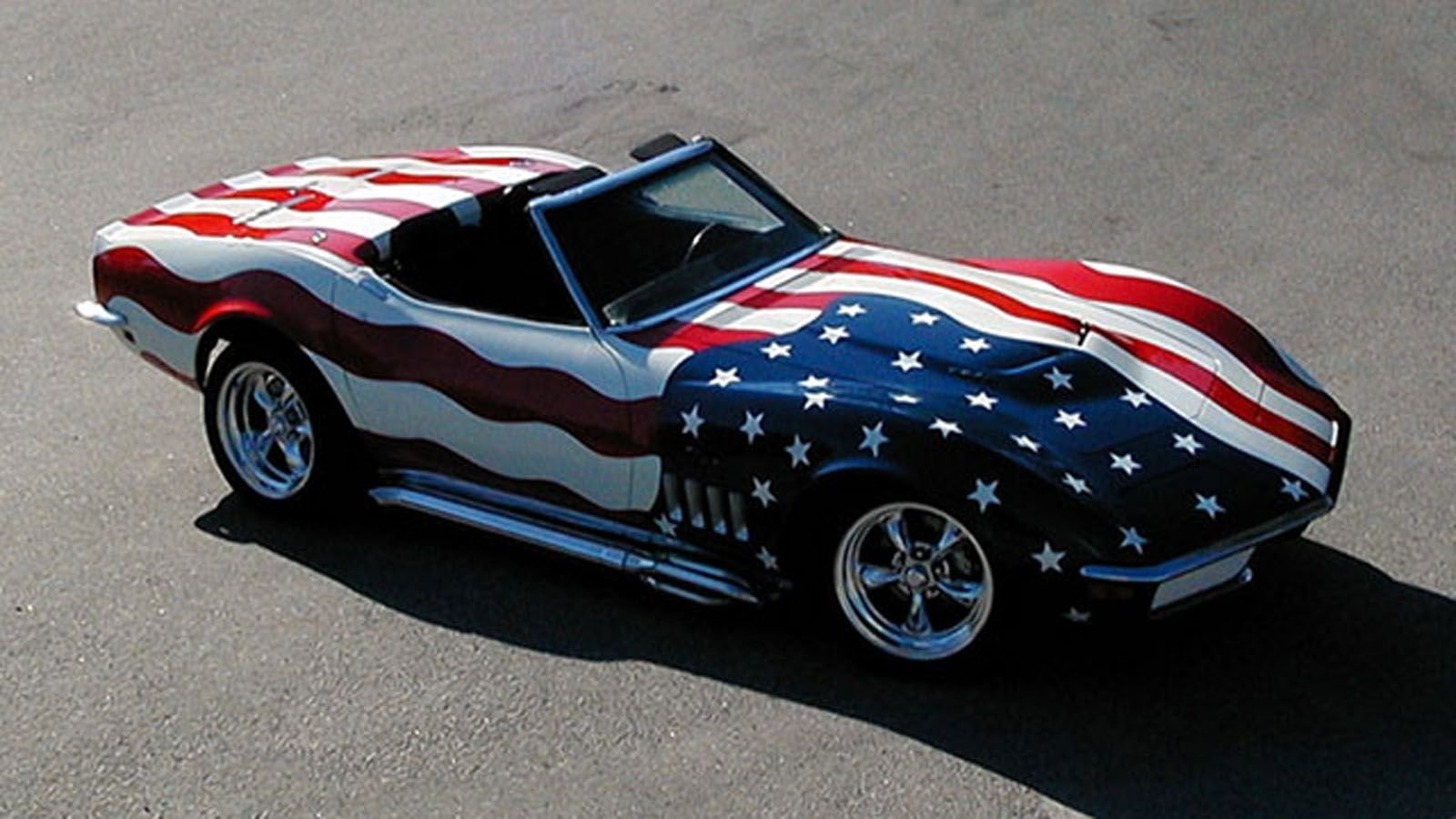
If you are considering dropping a $10,000 supercharger in your C6 Corvette – or getting a patriotic paint job on your C3 – how would such a big modification affect your insurance situation? 

With traditional insurance, modifying your vehicle to the tune of $2,000 or more (pun intended) can lead to coverage gaps, claim denials and policy cancellations. 

With specialty insurance, however, modifying your car is typically much less punishing than that. As a direct result of declaring mods, you may see three concrete changes to your custom car insurance policy. 

  • Increased premiums. An increase to your Agreed Value will generally lead to a small increase in premiums.
  • Increased claim payouts. If your modifications lead to a higher Agreed Value, you’ll receive a larger payout in the event of a total loss.
  • Longer lead times for covered repairs. Naturally, it’ll take longer to repair a modified vehicle than a bone stock one. But a good specialty provider can connect you with the right parts and labor to return your vehicle to pre-loss condition. 

Insuring custom builds vs. factory vehicles

As for insuring a custom-built car, any vehicle built from the ground up will be much more difficult to repair or replace than a bone-stock factory equivalent. 

As a result, the owner of the Mako Shark may see two key differences in his insurance situation than the owner of a regular C3: 

  • Higher likelihood of a total loss. Since it may be impossible to repair or replace a one-off custom car, the likelihood of it being “totaled” following an accident goes up.
  • Higher premiums. Since your custom car has a higher chance of being totaled, your premiums will likely be much higher to compensate. 

Even still, “higher” doesn’t have to mean “high.” At NCM Insurance, we understand that owners of highly modified cars tend to drive less (and less aggressively) in order to preserve the value of their special vehicle. 

Protect the time, money, and craftsmanship in your custom car. Request a custom

insurance quote.

Collector Car Insurance Image
Uncategorized

How Much Does Corvette Insurance Cost? Traditional vs Specialty Coverage Guide (2026 Rates)

Intro

Corvettes are fast, valuable, two-door performance cars that beckon you to drop it into third and let your Kentucky V8 howl. 

However, because they’re not a Toyota Corolla or a hybrid crossover, Corvettes are also enormously expensive to insure. After all, any car built to burn rubber is going to cost an arm and a leg for halfway-decent coverage. 

Or will it? 

In truth, while a Corvette owner may pay significantly higher premiums with a traditional auto insurance provider, you may find that a specialty insurance provider – who better understands both car and driver – can offer better protection at potentially lower rates. 

So let’s explore how much Corvette insurance costs with a traditional vs. specialty provider, how high-value ‘Vettes like the Z06 factor in, and how something called “AVP” helps Corvette owners nationwide sleep better at night. 

Average Corvette insurance costs by model and generation

How much does Corvette insurance cost for each generation of the American automotive icon? Are some generations significantly cheaper – or more expensive – than others?

To find out, we anonymously collected quotes from a major insurance provider using a typical Corvette driver profile: 

“Ralph Lauren” is a 57-year-old Kentucky resident with a clean driving record and a garage. Since he owns multiple cars, he drives his ‘Vette less than 4,000 miles per year. He also wants robust coverage for peace of mind: that means $250,000/$500,000/$250,000 in liability limits, plus collision and comprehensive, with a $250 deductible. 

As for the vehicles, we collected quotes using roughly the median agreed value for each Corvette generation. In other words, a pretty standard C1, C2, etc. Nothing too fancy (no 1967 L89s). 

Preamble aside, here’s what Ralph would pay a traditional insurance provider versus a specialty insurance provider for similar coverage: 

Corvette Generation Traditional Insurance Quote  Specialty Insurance Quote (NCM)
C1 Unavailable $500 – $600/year
C2 Unavailable $500 – $600/year
C3 $800 – $900/year $200 – $300/year
C4 $1,100 – $1,200/year $300 – $400/year
C5 $1,400 – $1,500/year $300 – $500/year
C6 $1,700 – $1,900/year $500 – $600/year
C7 Stingray $2,100 – $2,300/year $500 – $600/year
C8 Stingray $2,400 – $2,600/year $700 – $800/year

Aside from (potentially) lower rates, why else should a Corvette owner like you consider specialty insurance? 

Why Corvettes require specialty coverage

For many Corvette owners, a specialty insurance policy for your prized ride can provide significantly better protection – for potentially less money – than a traditional auto insurance policy.

Here are a few reasons why: 

  • Agreed value protection (AVP): With AVP, you and your provider will come to an agreement on the fair value of your Corvette before coverage even begins. That way, in the event of a total loss, you’ll receive a check for the agreed value – not the heavily depreciated value, as you typically would with a traditional auto policy.
  • Quality parts and labor: Specialty insurance providers understand that classic and high-performance cars require quality parts and skilled labor to restore to pre-loss condition. No slapping Bondo on it and calling it a day.
  • Modification-friendly: Let’s say you send your ‘Vette off to Callaway for a Gen4 Supercharger. In the event of a total loss, traditional insurance may not cover your $15,000 upgrade. But specialty providers may offer supplemental coverage to protect your modifications – however big or small.
  • Unique discounts: Finally, specialty providers may offer unique discounts to lower your premiums even further. At NCM Insurance, for example, we offer discounts for having an alarm in your garage, having paid membership to select automotive enthusiast groups and special multi-vehicle discounts for collectors. 

Stingray vs Z06 vs classic Corvette insurance considerations

In the chart above, you may have noticed that the cost of specialty insurance tends to dip around the C4 generation and peak with the C8. 

In fact, the most expensive Corvettes to insure tend to be your mint-condition C1s and tire-burning variants like the Z06, ZR1 and ZR1X. 

Why is that?

Ultimately, it comes down to the cost of repairs. Classic, rare and ultra-high-performance Corvettes have parts that are harder to find and harder to fix than your basic, mass-produced Stingray.

In addition, the frequency of total losses (where the cost of repairs exceeds the value of the car) is higher on these more “exotic” variants.  

As a net result, if you own a rare Corvette – whether it’s a 1978 Silver Anniversary or a 2026 ZR1 – you might consider a specialty Corvette insurance policy since the benefits over a traditional policy are amplified even further. 

How agreed value coverage protects long-term value

Finally, let’s briefly circle back on agreed value protection (AVP) since many owners call it the #1 benefit to having specialty Corvette insurance. 

To recap, AVP involves you and your provider “agreeing” on the fair value of the vehicle when you first purchase your policy. Your Corvette’s condition, rarity, modifications and more can all factor into the agreed value conversation. 

Once established, the agreed value will not change unless you specifically request an adjustment. For example, maybe you get $10,000 worth of restoration work done, and you’d like your Corvette’s agreed value to increase. Or maybe you’ve put some serious miles on your ‘Vette and you’d like your agreed value to decrease to reflect its current condition (and lower your premiums). 

In either case, your next step would be to have a conversation with your special insurance provider to come up with a new agreed value. They won’t change it until you specifically ask them to. 

Then, in the event of a total loss, your specialty provider will pay you the agreed value of your vehicle. This can often be thousands or tens of thousands more than the “fair market value,” or FMV, that traditional insurance providers use to calculate settlements. 

The bottom line: specialty Corvette insurance can be better, cheaper and more benefit-rich than traditional coverage. Insure your Corvette with a provider built around Corvette ownership. Get a Corvette-specific quote today.

E42A4608
Uncategorized

Sports Car Insurance Explained: How to Insure a High-Performance Vehicle 

2020 Mclaren Senna GTR at RM Sotheby’s Scottsdale 2025

Sports car insurance is like the 93 octane of auto insurance. It maximizes your car’s potential, improves its longevity and brings you – the owner – peace of mind.  

Because traditional car insurance (“87 octane,” if you will) isn’t tailor-suited for sports cars, it leaves too many gaps in coverage, and by the time you fill them with higher limits and additional coverage types, it can become prohibitively expensive.  

So let’s cover why traditional insurance is so expensive for sports cars, the crucial gaps it leaves, and how specialty car insurance for sports cars can actually save you time, stress and potentially money.  

What Qualifies as a “Sports Car” for Insurance Purposes?  

While there’s no industry-standard definition of a “sports car,” insurance carriers typically charge higher premiums for vehicles that are:  

  • Coupes or two-seaters 
  • Built for speed 
  • Lighter than a sedan 

Everything from a humble ND Miata to a Corvette C8 Z06 will fall into this category, and as a result, owners will often see higher rates for coverage compared to sedans, trucks or crossovers.  

Why Sports Cars Cost More to Insure  

Even though a C7 Corvette now costs less than a new Camry, most traditional carriers will charge more to insure the ‘Vette for a litany of reasons:  

  • High cost of repairs – High-performance cars are made of high-performance parts (e.g. carbon fiber parts, dynamic engine mounts, superchargers) that are more expensive to repair and replace.  
  • High cost of replacement – Sports cars generally cost more to purchase, and therefore, cost more for the insurance provider to replace.  
  • Elevated theft risk – Expensive high-performance vehicles are attractive targets for thieves. The Camaro ZL1 is the most stolen vehicle in America, according to the IIHS, with a vehicle theft rate 39 times higher than the average for all vehicles.  
  • Higher likelihood of a crash – Unsurprisingly, vehicles designed for speed tend to crash more often. An iSeeCars study found that Corvette owners were involved in crashes 4.8x more often than the average driver. Porsche 911 owners were just behind at 4.6x.  
  • Risky driver profiles – Finally, sports cars tend to attract young single men – the most expensive drivers to insure due to high rates of accidents – which can raise premiums for all drivers of that particular sports car.  

Coverage Options that Matter the Most 

When shopping for the best insurance for your sports car, you’ll want to consider both traditional and non-traditional coverage for true peace of mind:  

  • Liability – High horsepower can lead to more expensive crashes – especially if you plan to drive in proximity to other high-end sports cars (e.g. car meets, car shows, etc.). Therefore, you’ll want higher liability limits than your state’s required minimums.  
  • Collision – In a similar vein, you’ll want enough collision coverage to repair or replace your beloved sports car in the event of a total loss.  
  • Uninsured/Underinsured Motorist Protection – Statistically, most motorists don’t carry enough liability coverage to replace a $50,000+ sports car. 15.4% carry no insurance at all. That’s why sports car owners should strongly consider UM/UIM protection.  
  • Comprehensive – Finally, raising your comprehensive coverage limits can better protect the value of your sports car from weather damage, animal-related incidents, fire, and especially theft.  

While traditional insurance carriers will happily increase your liability/collision/comp limits, they may not be able to offer non-traditional support and coverage types that every sports car owner should consider. Things like:  

  • Agreed value insurance – Under an agreed value insurance policy, you and your insurance provider “agree” on a fair value of your vehicle before an accident occurs. This allows you to factor in things like rarity, condition, modifications etc.  
  • HPDE insurance – High-Performance Driver Education insurance, aka “track day insurance,” is a separate policy that covers damage to your vehicle incurred during an organized autocross or track day event – a crucial gap left by most traditional insurance.  
  • Specialty underwriting – Carriers that offer dedicated sports, exotic and classic car insurance typically employ underwriters that specialize in these types of vehicles – leading to a more tailored experience for owners.  

When specialty insurers outperform traditional carriers 

Specialty sports car insurance isn’t just more robust than traditional insurance; it can also be cheaper. At NCM Insurance, we understand that collector cars aren’t daily beaters. And not every sports car owner is auditioning for the Dukes of Hazzard – and deserves punishing rates for basic coverage.  

Instead, you’ll get a sports car insurance quote that’s tailored to you and your vehicle, backed by best-in-class customer service and a dedicated claims adjuster who speaks your language. A short call with NCM Insurance can result in better coverage, increased peace of mind, and possibly even lower rates than you’re paying today. 

Get a personalized sports car insurance quote from a specialty insurer who understands – and shares – your passion for performance vehicles. Click here for a quote!.