
Uncategorized
Monterey Car Week 2026:
Why Manual Supercars, Collector Icons, and Record Auctions Proved Faster Is No Longer Enough
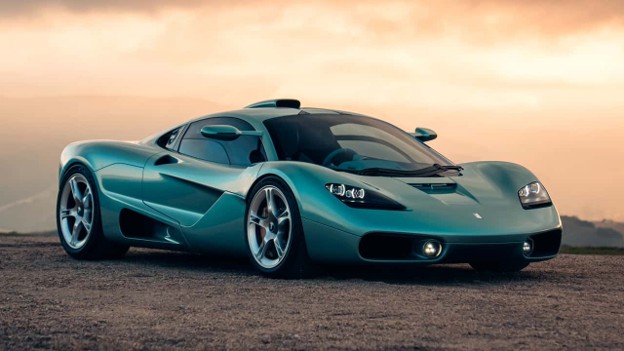
Monterey Car Week 2026 has never been short on spectacle, but this year felt unusually dense with moments that could reshape the future of performance cars, collector car values, and enthusiast culture well beyond one weekend. Gordon Murray Special Vehicles unveiled the S1, a 12,100-rpm V12 supercar with a six-speed manual. McLaren showed the McL 6GT, combining a modern carbon-fiber supercar with three pedals and a clear link back to Bruce McLaren’s original M6GT idea. Lamborghini introduced the Revuelto SV while celebrating six decades of the Miura.
Then there were the auctions. A Shelby Cobra Daytona Coupe sold for $42.9 million, a 1963 Corvette Grand Sport brought $18.7 million, and Nick Mason’s McLaren F1 GTR reached $34.7 million.
The cars could hardly have been more different, and that may have been the most important part.
When Better Became Predictable
For years, the next generation of a performance car was fairly easy to predict. Give it a little more power, add more technology, improve efficiency, increase capability, add a few features, and shave a few tenths from the acceleration time. The improvements were real, but the formula rarely changed.
What did not always improve by the same percentage was the experience.
That is why Monterey felt encouraging. Instead of suggesting the whole industry had found one new answer, it showed that there may no longer be only one accepted definition of “better.”
A Different Definition of Progress
At the highest end of the market, some manufacturers are beginning to treat involvement as seriously as output. The Gordon Murray S1 produces around 680 horsepower—almost modest by modern hypercar standards—but pairs it with a naturally aspirated V12 that spins past 12,000 rpm and a manual gearbox. McLaren’s McL 6GT similarly combines thoroughly modern construction with a six-speed manual and hydraulic steering.
Neither company is rejecting modern engineering. They are simply using it toward a different goal.
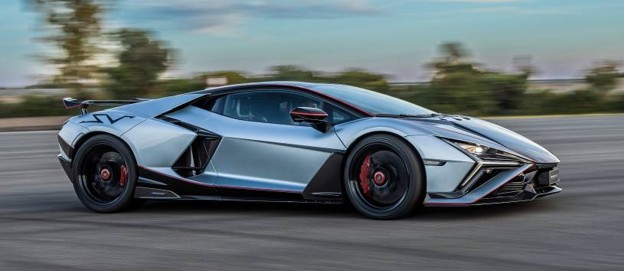
Lamborghini offered an entirely different answer with the Revuelto SV, using electrification, active systems, and more than 1,000 horsepower to push performance even further. Ferrari went further still in another direction: Chassis 0 of its new electric Luce sold for $40 million during a charity auction at Monterey. The result should not be treated as a conventional market valuation, but the attention surrounding Ferrari’s first electric production chassis showed just how many different ideas of the future were sharing the same peninsula.
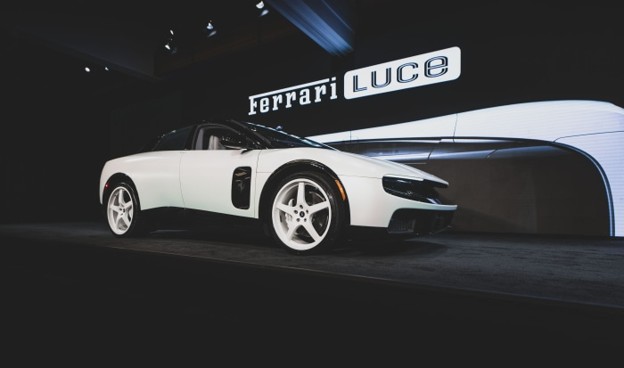
And to whoever bought it: call us.
That contrast may be the point. One manufacturer can chase greater involvement while another pursues technology and outright capability, and both can create something enthusiasts want. It could gain 200 horsepower, lose 200 pounds, add electric assistance, or add a clutch pedal.
When Experience Becomes the Upgrade
As extreme performance becomes more common, the way a car delivers that performance becomes more important. Throttle response, steering feel, sound, visibility, weight, gear changes, and even physical controls can become differentiators again.
It is a philosophy familiar to anyone who has chosen a manual sports car over the objectively quicker alternative.
The point is not that the slower car is automatically better. It is that the stopwatch measures only one part of the experience. Once nearly every serious performance car is fast, manufacturers have more reason to compete over how memorable that speed feels.
The Idea Is Already Spreading
The most encouraging part is that this thinking is not confined to boutique hypercars.
Porsche’s new 911 GT3 S/C pairs a naturally aspirated 4.0-liter flat-six that revs to 9,000 rpm with a manual-only gearbox. It is the first open-top GT3, combining modern GT3 performance with lightweight construction and an experience deliberately centered around sound, shifting, and involvement.
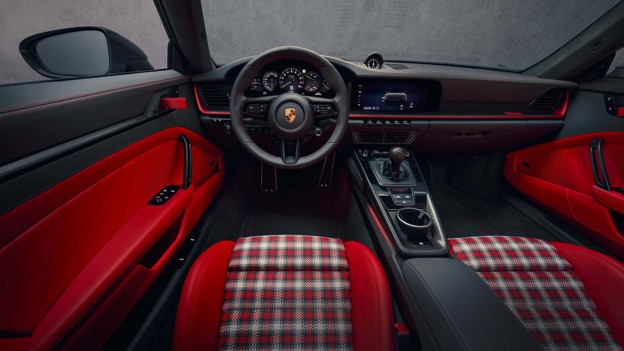
Porsche made a similar choice with the Carrera S, bringing a manual transmission back to North America following strong customer demand. BMW went further with the limited M3 CS Handschalter, combining rear-wheel drive, a six-speed manual, and nearly 75 pounds of weight reduction. It is not the quickest M3 configuration, but outright acceleration was never its only objective.
Toyota’s GRMN Corolla follows the same instinct from another corner of the performance market. Rather than simply adding a large horsepower increase, Toyota focused heavily on weight, chassis response, aerodynamics, and lessons learned through motorsport development.
None of these brands appear to be copying one another. They seem to be responding to the same signal: enthusiasts are willing to value personality and participation alongside measurable performance.
What Monterey’s Icons Already Know
Walk around Monterey long enough and the lesson becomes difficult to ignore. Miuras, historic racers, Le Mans machinery, prototypes, and other cars that have been objectively surpassed for decades can still command as much attention as the newest machinery.
The auction results put numbers behind the same idea. The Daytona Coupe, Corvette Grand Sport, and F1 GTR did not command extraordinary prices because they remain the quickest cars in the world. Their value comes from what cannot be easily replaced: competition history, engineering significance, provenance, scarcity, and the stories attached to individual chassis.
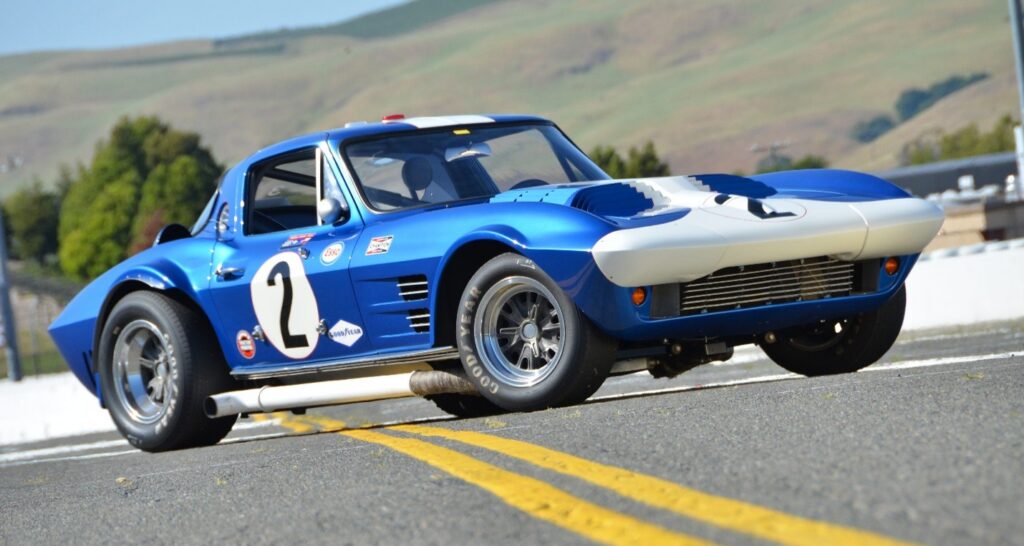
The Grand Sport may be one of the clearest examples. Only five were built, but rarity alone does not explain its appeal. It represents Zora Arkus-Duntov and Chevrolet attempting to create a purpose-built Corvette capable of taking on the world’s best sports racers. More than sixty years later, the numbers have been surpassed. The idea behind the car has not.
The Future Gets Interesting Again
None of this means the horsepower race is over, nor should it be. There is still room for cars that chase top speed, electrification, active aerodynamics, and technologies we have not yet imagined.
The exciting change is that those may no longer be the only accepted paths forward.
One manufacturer may decide the next breakthrough is 1,500 horsepower. Another may decide it is 2,500 pounds. One may build a smarter transmission; another may let the driver shift it. One may chase a lower lap time while another chases a higher redline.
For years, new performance cars often felt like predictable improvements on the same formula. Monterey 2026 offered a glimpse of something different: an industry beginning to compete not only over which car is faster, but over which car gives its driver the strongest reason to care.
After years of knowing roughly what came next, not knowing may be the most exciting part.